

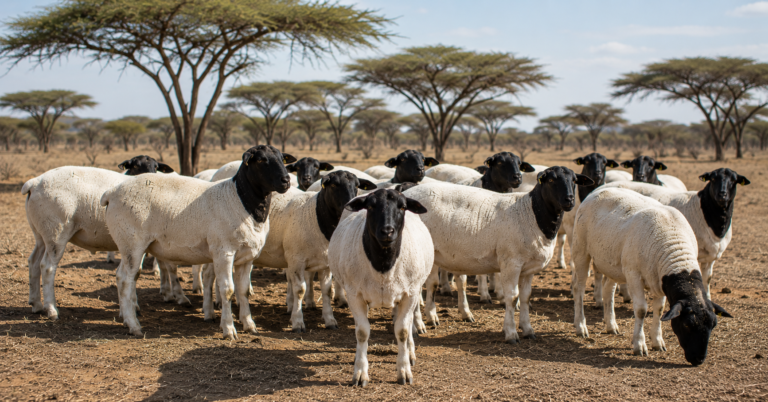
Few livestock breeds have earned a reputation for practicality quite like the Dorper. As more farmers search for animals that combine productivity with manageable labor requirements, one question continues to surface: are Dorper sheep low maintenance? The breed is often promoted as an easy-care sheep, but understanding what that really means requires looking at feeding, health management, reproduction, housing, and day-to-day flock care.
Table of Contents
Why Dorper Sheep Are Considered Low Maintenance
Dorper sheep were developed in South Africa under challenging environmental conditions where adaptability and efficiency were essential. Breeders selected animals that could thrive on available forage, tolerate harsh climates, and maintain productivity with minimal intervention.
Those traits remain evident today. Compared to many traditional sheep breeds, Dorpers are generally easier to manage because they combine hardiness, strong reproductive performance, and efficient feed utilization into a single package.
Their Self-Shedding Coat Reduces Labor
One of the biggest reasons Dorper sheep are considered low maintenance is their self-shedding coat. Unlike wool breeds that require annual shearing, Dorpers naturally shed much of their fleece as seasons change.
This characteristic reduces labor requirements, eliminates shearing expenses, and removes one of the most time-consuming management tasks associated with sheep production. For many smallholders and commercial producers, this advantage alone makes the breed attractive.
Dorper Sheep Are Efficient Feed Utilizers
Another factor contributing to the breed’s popularity is its ability to utilize a diverse range of forage resources. Dorpers are both grazers and browsers, meaning they can consume grasses, shrubs, weeds, and browse that some livestock species may ignore.
Their adaptability allows farmers to make better use of available vegetation while reducing dependence on purchased feeds. However, low maintenance does not mean no maintenance. Productive animals still require balanced nutrition, clean water, and appropriate mineral supplementation.
Health Management Is Often Simpler Than Expected
Many farmers appreciate the breed’s reputation for hardiness. Dorper sheep generally perform well under a variety of environmental conditions and are known for their resilience when managed correctly.
Even so, routine vaccination programs, parasite control, hoof inspections, and regular health monitoring remain essential. The difference is that Dorpers often require less intensive management than some higher-maintenance breeds, particularly when raised in well-designed grazing systems.
Strong Maternal Traits Reduce Lambing Problems
Reproduction is another area where Dorpers often simplify flock management. Ewes are widely recognized for their strong maternal instincts, good lamb-rearing ability, and relatively high fertility.
Many producers report fewer lambing complications compared to some specialized breeds. Healthy ewes typically raise vigorous lambs with minimal assistance when nutrition and management are adequate.
Do Dorper Sheep Need Expensive Housing?
Unlike livestock that require elaborate housing systems, Dorper sheep generally adapt well to simple facilities. Access to shade, windbreaks, and basic shelter is usually sufficient in many production environments.
Their ability to tolerate varying climatic conditions helps reduce infrastructure costs. Nevertheless, farmers should still provide protection from prolonged rain, extreme heat, and severe weather to maintain animal welfare and productivity.
Are Dorper Sheep Good for Beginners?
Many experienced producers recommend Dorpers to first-time sheep farmers because they are forgiving of minor management mistakes and adapt well to different production systems. Their calm temperament, low shearing requirements, and efficient grazing behavior make them easier to manage than many alternatives.
That does not mean they can be neglected. Successful flock management still requires observation, record keeping, nutrition planning, and preventive health care.
Where Dorper Sheep Still Require Attention
The term low maintenance can sometimes create unrealistic expectations. Dorper sheep still require:
- Quality forage and clean water
- Secure fencing
- Routine health checks
- Vaccinations
- Parasite management
- Breeding management
- Predator protection
- Record keeping
Farmers who consistently meet these basic requirements generally achieve the best results.
Conclusion
When compared to many traditional sheep breeds, the answer to are Dorper sheep low maintenance is generally yes. Their self-shedding coat, adaptability, efficient use of forage, strong maternal traits, and hardy nature reduce many of the labor demands associated with sheep farming. While they still require proper nutrition, health care, and routine management, Dorpers offer one of the most practical options for producers seeking productive sheep without excessive maintenance requirements.