

Strong genetics rarely come cheaply, and few livestock investments illustrate that better than Dorper sheep. Interest in understanding what are Dorper sheep worth has grown alongside the breed’s popularity among meat producers and breeding enthusiasts. Yet assigning a value to a Dorper involves much more than simply looking at body size or age. Pedigree status, bloodlines, reproductive performance, and the origin of the animals all contribute to the prices seen in the market.
Table of Contents
Why Quality Genetics Carry a Premium
Behind every productive flock lies years of selective breeding. Dorper sheep have earned worldwide recognition for their growth rates, strong maternal traits, adaptability, and desirable carcass characteristics. Consequently, breeding stock with proven performance and documented pedigrees often commands significantly higher prices than ordinary commercial animals.
From a long-term perspective, many producers view superior genetics as an investment capable of influencing flock productivity for generations.
Average Dorper Sheep Prices in Kenya
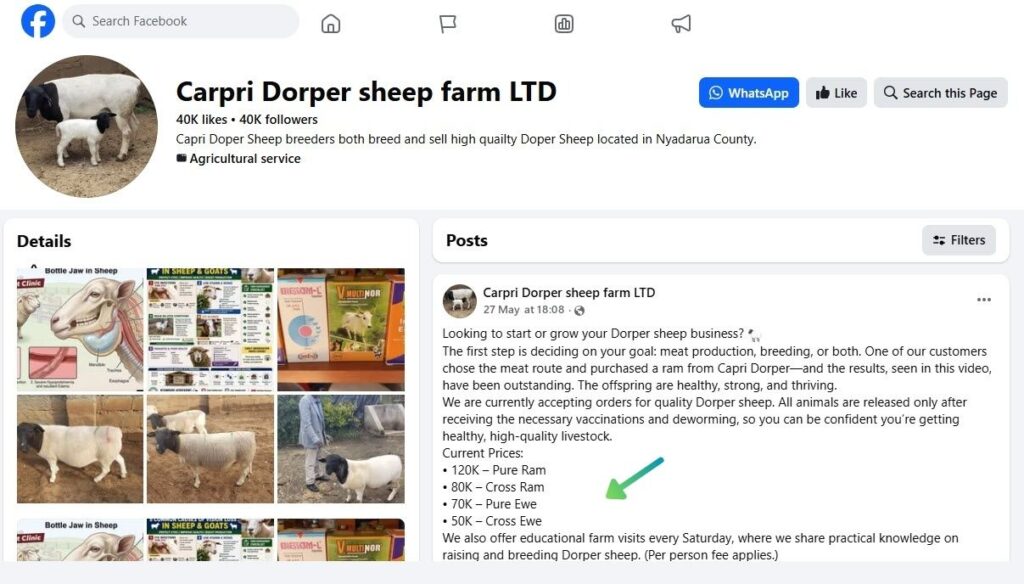
Prices vary between breeders and regions, although the following figures represent common values observed in the Kenyan market. Approximate US dollar values have been rounded to the nearest five dollars to simplify comparisons.
| Type of Dorper Sheep | Average Price (KES) | Approximate Price (USD) |
|---|---|---|
| Crossbred Pedigree Ewe | KSh 25,000 | $190 |
| Purebred Pedigree Ewe | KSh 50,000 | $385 |
| Crossbred Pedigree Ram | KSh 50,000 | $385 |
| Purebred Pedigree Ram | KSh 100,000 | $770 |
| Imported Purebred Pedigree Ewe | KSh 150,000 | $1,155 |
| Imported Purebred Pedigree Ram | KSh 250,000 | $1,925 |
Although these figures provide a useful reference point, actual prices may fluctuate depending on demand, breeder reputation, and animal performance.
Bloodlines Often Influence Value More Than Weight
Two sheep of similar size can sell for vastly different amounts. A ram backed by elite bloodlines and strong growth records may command a premium because of the genetic impact he can have on future generations.
Likewise, productive ewes with a proven history of raising healthy lambs often become highly sought after by breeders aiming to improve flock performance.
Imported Genetics Come at a Higher Cost
Bringing animals into the country involves more than paying the purchase price. Transport expenses, quarantine requirements, import permits, and adaptation costs all contribute to the higher values associated with imported stock.
Nevertheless, some producers willingly absorb these costs to introduce fresh genetics and accelerate genetic progress within their flocks. Others achieve excellent results by building around locally bred purebreds with established performance records.
Crossbred Dorpers Still Represent Excellent Value
Not every successful sheep enterprise begins with imported pedigree animals. In fact, many commercial producers favor crossbred Dorpers because they combine affordability with strong performance.
Their lower entry cost makes them attractive to farmers seeking hybrid vigor without committing to the expense associated with elite breeding stock. When selected carefully, crossbred animals can provide impressive returns in meat production systems.
Looking Beyond the Price Tag
Seasoned producers rarely purchase sheep based solely on cost. Characteristics such as structural soundness, fertility, body condition, health status, and overall productivity frequently carry more importance than the initial purchase price.
A cheap animal with poor genetics can become expensive through reduced growth rates, lower conception rates, and disappointing lamb crops. By contrast, quality breeding stock often repays its purchase price through improved flock performance over time.
How Much Should a Beginner Spend?
For newcomers, balancing ambition with affordability is usually the wisest approach. Starting with healthy animals from reputable breeders often proves more beneficial than chasing elite genetics immediately.
Many first-time producers establish solid foundations with crossbred or locally bred purebred sheep before investing in higher-value animals as their management skills and breeding objectives evolve.
Conclusion
Prices may rise and fall, but the principles behind livestock valuation remain remarkably consistent. Producers researching what are Dorper sheep worth soon discover that genetics, productivity, and long-term breeding potential matter just as much as the numbers attached to a sale. Whether investing in crossbred ewes or imported pedigree rams, focusing on value rather than simply price is often what separates thriving sheep enterprises from disappointing ones.