

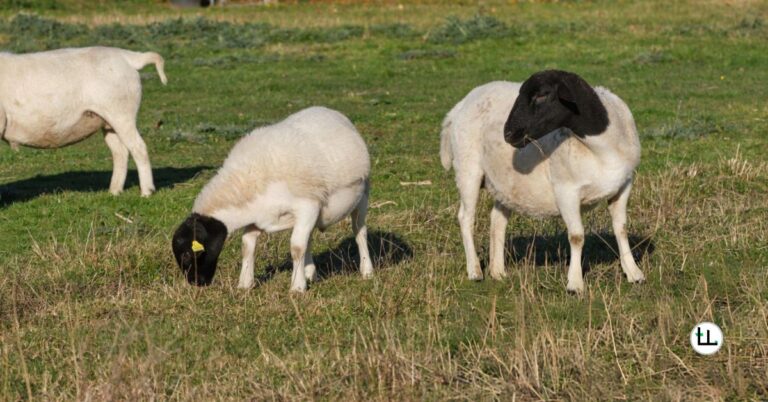
Crossbreeding has become one of the most practical tools available to commercial sheep farmers, and the Dorper crossbreeding benefits explain why this breed sits at the center of so many breeding programmes across East Africa. Farmers working with indigenous breeds like Red Maasai or Blackhead Persian often turn to Dorper genetics specifically to correct weaknesses in growth rate, carcass quality, or coat shedding, while retaining the local hardiness that lets sheep survive on marginal pasture. The result, when done correctly, is a flock that grows faster, finishes heavier, and still copes with the disease pressure and feed scarcity typical of semi-arid and arid farming zones.
This article breaks down what crossbreeding actually does genetically, the specific advantages farmers report, and how to approach it without losing the qualities that made your base stock viable in the first place.
Table of Contents
What Crossbreeding Actually Achieves
Crossbreeding works on a principle called hybrid vigor, or heterosis. When two genetically distinct breeds are mated, the offspring frequently outperform the average of both parent breeds in traits like growth rate, fertility, and disease resistance. This isn’t guesswork dressed up as science. It’s a well-documented outcome of combining different gene pools, and it’s the main reason Dorper genetics get introduced into local flocks rather than simply replacing them outright.
Combining Maternal Hardiness with Terminal Growth
Most crossbreeding programmes in Kenya follow a structured logic. Indigenous ewes, such as Red Maasai, contribute strong maternal traits: parasite resistance, good mothering ability, and the capacity to maintain body condition on poor-quality forage. Dorper rams contribute the terminal traits buyers pay for: rapid growth, a well-muscled carcass, and a hair coat that sheds without requiring shearing. Crossing the two produces F1 lambs that grow faster than pure indigenous stock while still surviving conditions that would stress a pure Dorper flock unaccustomed to local disease loads.
Key Dorper Crossbreeding Benefits
Faster Growth Rates and Earlier Market Readiness
One of the clearest Dorper crossbreeding benefits is the jump in lamb growth rate compared to many indigenous breeds farmed alone. Crossbred lambs typically reach market weight several weeks earlier than pure local stock, which shortens the production cycle and improves cash flow for commercial operations. Exact growth figures vary with nutrition, health management, and the specific indigenous breed used in the cross, so farmers should treat any growth projections as a guide rather than a guarantee.
Improved Carcass Quality and Market Value
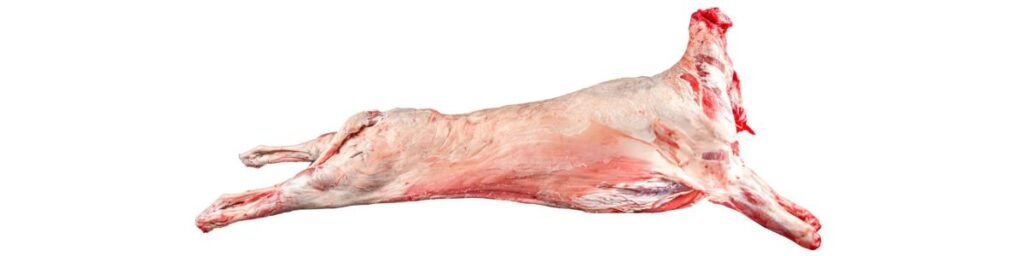
Dorper genetics are known for producing a well-fleshed carcass with good fat distribution, and this trait transfers reasonably well into crossbred offspring. Butchers and live-animal buyers in most Kenyan markets pay a premium for animals with visibly better muscling over the loin and hindquarter. For farmers selling into urban meat markets, this translates directly into better prices per kilogram, whether the sale is priced in KES or, for export-oriented operations, quoted in USD.
Retained Hardiness Through the Maternal Line
A pure Dorper flock introduced into an unfamiliar disease environment can struggle, particularly with internal parasites and tick-borne conditions it hasn’t been exposed to historically. Crossbreeding sidesteps this by keeping the maternal line rooted in locally adapted genetics. The ewe base continues to handle local conditions while the Dorper influence improves what the lambs become. This is one of the more underappreciated Dorper crossbreeding benefits, since it protects against the lamb losses that sometimes follow importing purebred stock without proper acclimatization.
Better Reproductive Performance
Crossbred ewes often show improved fertility and lambing rates compared to either parent breed on its own, a classic expression of hybrid vigor. Farmers managing flocks on 2 to 5 hectares (roughly 5 to 12 acres) of grazing land tend to find this particularly valuable, since higher lambing percentages mean more saleable lambs without needing additional land or breeding stock.
Coat Shedding Reduces Labor and Shearing Costs
Dorper sheep are hair sheep, meaning they shed their coat naturally rather than growing wool that needs shearing. When crossed with woolled indigenous breeds, offspring frequently inherit a partial or full shedding coat. This cuts down on shearing labor and the associated costs, which matters for farmers managing flock sizes where shearing crews or equipment represent a real line item in the budget.
Practical Considerations for Crossbreeding Programmes
Choosing the Right Base Ewe Breed
Not every indigenous breed crosses with the same results. Red Maasai ewes are commonly favored for their parasite resistance and reasonable size, while Blackhead Persian crosses tend to emphasize fat-tail traits that some markets value differently. Farmers should assess what their target market actually rewards, whether that’s lean muscling, fat content, or simple liveweight, before settling on a base breed.
Managing the F1 Generation and Beyond
First-generation (F1) crosses usually show the strongest hybrid vigor. Farmers running grading-up programmes, where Dorper rams are used across multiple generations to gradually increase Dorper genetic content, should track each generation’s performance rather than assuming the benefits compound indefinitely. Hybrid vigor tends to be strongest in the F1 cross and can diminish in later generations as the gene pool narrows toward one breed.
Avoiding Inbreeding Within the Crossbred Flock
A common mistake in smallholder crossbreeding programmes is reusing the same ram across multiple seasons without rotation, which risks inbreeding within a flock that’s already been carefully built up. Maintaining a breeding plan with ram rotation or periodic introduction of new genetics protects the gains made through the original cross.
Conclusion
The Dorper crossbreeding benefits, faster growth, improved carcass quality, retained local hardiness, better reproductive performance, and reduced shearing labor, make a strong case for why this approach has become standard practice across commercial and smallholder operations alike. The key to capturing these benefits consistently lies in selecting the right base breed, managing successive generations carefully, and avoiding the genetic shortcuts that erode hybrid vigor over time. Results will always vary depending on management, climate, and nutrition, but a well-planned crossbreeding programme remains one of the most reliable ways to lift flock performance without starting from scratch.