

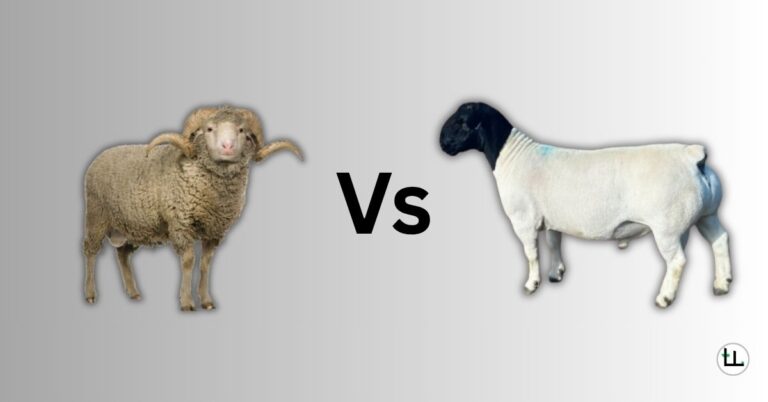
Dorper vs Merino sheep is one of the most common comparisons among livestock farmers because these two breeds were developed for completely different production purposes. Dorper sheep are internationally recognized as one of the world’s leading meat breeds, prized for their rapid growth performance, excellent feed conversion, and high-quality carcasses. Merino sheep, on the other hand, are the world’s most famous wool breed, producing fine, high-value fleece while also contributing to meat production in many farming systems.
Choosing between Dorper and Merino sheep depends largely on farm objectives. Farmers focusing on commercial lamb production often prefer Dorper sheep because of their rapid growth and efficient meat production. Those targeting premium wool markets usually select Merino sheep because of their exceptional fleece quality. In some enterprises, both breeds are incorporated into crossbreeding programmes to improve overall productivity.
This guide compares Dorper and Merino sheep in terms of origin, physical characteristics, growth rate, wool production, meat quality, adaptability, fertility, feed requirements, disease resistance, and profitability to help farmers determine which breed best suits their production goals.
Table of Contents
Overview of Dorper Sheep
Dorper sheep originated in South Africa during the 1930s through the crossing of the Dorset Horn and the Blackhead Persian.
The breed was developed specifically for efficient meat production under dry and challenging environmental conditions.
Dorper sheep are known for:
- Excellent growth performance
- Superior feed conversion
- High dressing percentage
- Rapid maturity
- Strong fertility
- Good mothering ability
- Natural coat shedding
- Adaptability to diverse climates
These characteristics have made Dorper sheep one of the most widely distributed meat breeds in the world.
Overview of Merino Sheep
Merino sheep originated in Spain before spreading throughout Australia, South Africa, New Zealand, and many other sheep-producing countries.
The breed was developed primarily for fine wool production rather than maximum meat output.
Merino sheep are recognized for:
- Exceptional fine wool
- High fleece value
- Strong grazing ability
- Good adaptability
- Long productive lifespan
- Efficient wool production
Although Merinos also produce meat, their primary commercial value remains wool.
Origin and Breed Development
The two breeds were developed for entirely different industries.
Dorper sheep were bred to maximize meat production while minimizing management requirements.
Merino sheep were selectively bred over centuries to improve fleece quality, fiber diameter, wool yield, and wool consistency.
As a result:
- Dorper emphasizes meat production.
- Merino emphasizes wool production.
These contrasting breeding goals explain many of the differences observed between the two breeds.
Physical Characteristics
Dorper and Merino sheep are easily distinguished by appearance.
Dorper Sheep
Dorper sheep typically have:
- Large muscular bodies
- Broad chest
- Thick hindquarters
- Medium-length legs
- White body with black head (Black-headed Dorper) or entirely white coat (White Dorper)
- Hair and wool coat that naturally sheds
Their body structure reflects decades of selection for meat production.
Merino Sheep
Merino sheep generally have:
- Medium-sized frame
- Dense fine fleece
- White wool covering most of the body
- Wrinkled skin in many bloodlines
- Narrower body than Dorper sheep
Their body conformation is designed primarily to maximize wool production.
Body Size Comparison
Dorper sheep are generally larger, heavier, and more muscular than Merino sheep.
Their superior muscling contributes to:
- Larger carcasses
- Higher meat yield
- Faster finishing
- Better market weights
Merino sheep allocate more nutrients toward wool production rather than muscle growth.
Growth Rate Comparison
Growth rate is one of the greatest advantages of Dorper sheep.
Dorper lambs grow rapidly when provided with balanced nutrition.
Their outstanding growth performance allows producers to market lambs earlier while reducing finishing costs.
Merino lambs generally grow more slowly because genetic selection has focused primarily on fleece production.
Although they eventually reach respectable mature weights, they usually require more time to achieve market weight than Dorper lambs.
Feed Conversion Ratio
Dorper sheep are internationally recognized for excellent feed conversion.
They efficiently convert quality feed into lean muscle, making them highly profitable in commercial meat enterprises.
Merino sheep convert a greater proportion of nutrients into wool production.
While they utilize pasture efficiently, they generally produce slower live-weight gains than Dorper sheep under similar feeding conditions.
For farmers targeting meat production, Dorper sheep usually provide greater returns per kilogram of feed consumed.
Wool Production
This is the area where Merino sheep clearly outperform Dorper sheep.
Dorper Sheep
Dorper sheep naturally shed much of their coat and generally require little or no routine shearing.
Their coat consists of a mixture of hair and wool, making them unsuitable as a commercial wool breed.
Advantages include:
- Reduced shearing costs.
- Lower labor requirements.
- Better heat tolerance.
- Simplified flock management.
Merino Sheep
Merino sheep produce some of the world’s finest commercial wool.
Their fleece is valued for:
- Fine fiber diameter.
- Soft texture.
- High market value.
- Excellent spinning quality.
- Premium textile production.
Routine shearing is an essential part of Merino sheep management and represents a major income source for wool producers.
Disease Resistance
Dorper and Merino sheep differ considerably in disease susceptibility because of their breeding history and physical characteristics.
Dorper Sheep
Dorper sheep are hardy animals that perform well under a wide range of production systems when managed properly.
Maintaining flock health requires:
- Routine vaccination programmes
- Strategic internal parasite control
- Balanced nutrition
- Proper biosecurity
- Clean housing
Their naturally shedding coat also reduces some management challenges associated with fleece contamination and external parasites.
Merino Sheep
Merino sheep are generally healthy but require more intensive management because of their dense wool.
Their heavy fleece can increase the risk of:
- Flystrike
- Wool contamination
- Heat stress
- Skin infections if poorly managed
Regular shearing, crutching, and careful health monitoring are essential components of Merino flock management.
Fertility and Reproduction
Both breeds demonstrate good reproductive performance, although they have different production strengths.
Dorper Sheep
Dorper ewes are known for:
- High fertility.
- Strong mothering ability.
- Good milk production.
- Rapid lamb growth.
- Excellent lamb survival.
Their reproductive efficiency supports commercial meat production and rapid flock expansion.
Merino Sheep
Merino ewes also possess good reproductive characteristics.
They are valued for:
- Reliable fertility.
- Good maternal instincts.
- Long productive lifespan.
- Consistent lamb production.
However, lamb growth is generally slower than that of Dorper sheep because the breed has been selected primarily for wool production.
Meat Production
Meat production is one of the strongest advantages of Dorper sheep.
Dorper Sheep
Dorper sheep produce:
- Heavy carcasses.
- Thick muscle development.
- Excellent dressing percentage.
- Tender meat.
- Rapid finishing.
These characteristics have made the breed one of the world’s leading commercial meat sheep.
Merino Sheep
Merino sheep also produce quality lamb and mutton.
However, compared with Dorper sheep they generally have:
- Smaller carcasses.
- Less muscle development.
- Slower finishing.
- Lower dressing percentage.
Many commercial producers use Merino ewes crossed with terminal meat sires to improve carcass performance.
Feed Requirements
The nutritional priorities of the two breeds differ because of their production objectives.
Dorper Sheep
Dorper sheep perform best when provided with:
- High-quality forage
- Adequate energy
- Balanced protein
- Continuous mineral supplementation
- Clean drinking water
Excellent nutrition allows the breed to maximize growth performance and feed conversion.
Merino Sheep
Merino sheep also require balanced nutrition but allocate a larger proportion of nutrients toward wool production.
Adequate nutrition supports:
- Wool growth.
- Fiber quality.
- Reproduction.
- General health.
Deficiencies in protein, energy, or minerals often reduce both fleece quality and reproductive performance.
Shearing Requirements
This is one of the biggest management differences between the two breeds.
Dorper Sheep
Most Dorper sheep naturally shed much of their coat.
Only some individuals require occasional shearing if they retain excessive wool.
Advantages include:
- Lower labor costs.
- Reduced equipment requirements.
- Improved heat tolerance.
- Simpler flock management.
Merino Sheep
Merino sheep require routine shearing, usually once each year.
Regular shearing:
- Prevents excessive wool growth.
- Improves animal comfort.
- Reduces flystrike risk.
- Produces marketable fleece.
Without proper shearing, wool can become heavily contaminated and compromise animal welfare.
Adaptation to Kenya
Both breeds can be raised successfully in Kenya, although they suit different production systems.
Dorper Sheep in Kenya
Dorper sheep perform particularly well in:
- Commercial meat enterprises.
- Semi-intensive farms.
- Improved pasture systems.
- Farms using supplementary feeding.
Their natural shedding ability makes them especially suitable for warm regions.
Merino Sheep in Kenya
Merino sheep perform better in cooler highland areas where conditions favor wool production.
Farmers raising Merinos must also have access to:
- Regular shearing services.
- Wool marketing channels.
- Good flock health management.
For producers interested primarily in meat production, Dorper sheep are generally more practical under Kenyan conditions.
Crossbreeding Dorper and Merino Sheep
Crossbreeding Dorper and Merino sheep is practiced in many countries.
The objective is to combine:
- Dorper’s superior growth performance.
- Dorper’s excellent feed conversion.
- Dorper’s carcass quality.
- Merino’s wool production.
- Merino’s maternal qualities.
Crossbred lambs often produce heavier carcasses than pure Merinos while retaining some valuable maternal characteristics.
The exact outcome depends on breeding objectives and selection practices.
Common Mistakes When Choosing Between the Two Breeds
Farmers sometimes select breeds without matching them to their business goals.
Common mistakes include:
- Choosing Merino sheep without access to wool markets.
- Purchasing Dorper sheep while expecting commercial wool production.
- Ignoring pasture quality.
- Neglecting mineral supplementation.
- Failing to budget for annual shearing.
- Purchasing breeding stock without performance records.
- Ignoring local climate.
- Choosing breeds based solely on popularity.
Successful breed selection begins with clearly defined production objectives.
Frequently Asked Questions
Which breed grows faster, Dorper or Merino?
Dorper sheep grow considerably faster because they were specifically developed for commercial meat production.
Which breed produces better meat?
Dorper sheep generally produce larger carcasses, better muscling, and higher dressing percentages than Merino sheep.
Which breed produces wool?
Merino sheep produce premium fine wool and are regarded as one of the world’s leading wool breeds. Dorper sheep naturally shed much of their coat and are not considered commercial wool producers.
Do Dorper sheep require shearing?
Most Dorper sheep require little or no routine shearing because they naturally shed their hair and wool mixture. Some individuals may occasionally require shearing if they retain wool patches.
Can Dorper and Merino sheep be crossbred?
Yes. Crossbreeding is commonly used to improve meat production while retaining some desirable maternal and wool-producing characteristics.
Which breed is more profitable?
Profitability depends on the production system. Dorper sheep generally generate higher profits for meat-focused enterprises because of their superior growth performance and feed conversion. Merino sheep may be more profitable where premium wool markets are available and wool production forms a significant source of farm income.
Conclusion
When comparing Dorper vs Merino sheep, the better breed depends entirely on the farmer’s production objectives. Dorper sheep are the superior choice for commercial meat production because of their outstanding growth performance, efficient feed conversion, rapid maturity, natural coat shedding, and excellent carcass quality. They require less labor for fleece management and are particularly well suited to warm climates and modern meat production systems.
Merino sheep remain unmatched in premium wool production. Their fine fleece commands high market value, making them the preferred breed for wool enterprises despite requiring annual shearing and more intensive fleece management. Although Merinos also produce meat, they generally cannot match the growth rate, muscling, or finishing ability of Dorper sheep.
For farmers focused on lamb production and meat sales, Dorper sheep usually offer greater economic returns. For producers targeting the wool industry, Merino sheep remain the global benchmark. Some mixed enterprises successfully combine the strengths of both breeds through well-planned crossbreeding programmes, allowing farmers to balance meat production with valuable wool and maternal traits.