

Internal parasites in Dorper sheep are among the most significant health challenges affecting flock productivity, regardless of whether sheep are raised under intensive, semi-intensive, or extensive grazing systems. Although Dorper sheep are recognized for their hardiness, rapid growth, and adaptability, they remain vulnerable to parasitic infections that can reduce weight gain, impair reproduction, weaken immunity, and increase lamb mortality if left unmanaged.
Parasites often build up gradually, making early infestations difficult to detect. By the time obvious symptoms such as weight loss, poor body condition, or anemia appear, production losses may already be substantial. Fortunately, effective parasite control combines strategic treatment, good grazing management, balanced nutrition, and routine flock monitoring rather than relying solely on deworming medications.
This guide explains the most common internal parasites affecting Dorper sheep, how they spread, clinical signs to watch for, treatment options, and practical strategies for maintaining long-term flock health.
Table of Contents
What Are Internal Parasites in Dorper Sheep?
Internal parasites are organisms that live inside a sheep’s body, feeding on blood, nutrients, or intestinal contents while reducing the animal’s health and productivity. Most economically important parasites live within the digestive system, although others may affect the lungs or liver.
These parasites reproduce by laying eggs that are passed through manure onto pasture. Under favorable environmental conditions, the eggs hatch into larvae that contaminate grazing areas. Sheep become infected while feeding, allowing the parasite life cycle to continue.
Young lambs, recently weaned sheep, pregnant ewes, and animals experiencing nutritional stress are generally more susceptible to heavy parasite burdens because their immune systems are less capable of limiting parasite development.
While low parasite levels may cause few noticeable problems, heavy infestations can severely affect growth performance, feed conversion, and overall flock productivity.
Why Internal Parasites Are a Major Concern for Dorper Farmers
Parasites affect nearly every aspect of sheep production.
Infected sheep consume feed that should support growth, reproduction, and meat production, but much of these nutrients are instead diverted to repairing tissue damage or supporting immune responses against parasites.
As parasite burdens increase, sheep may experience:
- Reduced appetite
- Poor weight gain
- Lower feed conversion
- Declining body condition score
- Reduced fertility
- Poor milk production
- Increased disease susceptibility
- Higher lamb mortality
Heavy infestations can also increase production costs through reduced market weights, increased veterinary expenses, and greater labor requirements.
Commercial producers often experience slower finishing rates, while smallholder farmers may lose valuable breeding animals if parasite control is neglected.
Common Internal Parasites Affecting Dorper Sheep
Several parasite species commonly affect sheep, although their importance varies depending on climate, grazing system, and geographical location.
Understanding which parasites are present allows farmers to develop more effective control programmes.
Barber’s Pole Worm (Haemonchus contortus)
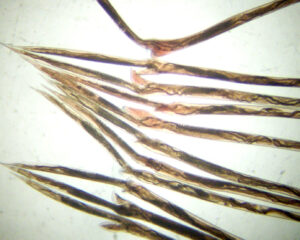
Barber’s pole worm is considered one of the most economically important internal parasites affecting sheep worldwide.
Unlike many intestinal worms, this parasite feeds directly on blood within the stomach, causing severe anemia in heavily infected animals.
Clinical signs may include:
- Pale eyelids
- Weakness
- Bottle jaw
- Weight loss
- Reduced exercise tolerance
- Sudden death in severe cases
Warm, moist conditions favor rapid development of infective larvae on pasture, making barber’s pole worm particularly problematic during rainy seasons.
Brown Stomach Worm (Teladorsagia circumcincta)

By Dr Enterocasso – Self-photographed;, CC BY-SA 2.0, Link
Brown stomach worms damage the stomach lining, reducing digestive efficiency and nutrient absorption.
Affected sheep often lose weight despite adequate feed availability and may develop poor fleece quality in wool breeds. Although Dorpers are hair sheep, reduced feed utilization still affects growth and productivity.
Black Scour Worm (Trichostrongylus species)
These parasites primarily affect the small intestine.
Infected sheep commonly develop diarrhea, reduced appetite, and slower growth rates. Young lambs are particularly vulnerable when grazing contaminated pastures.
Intestinal Threadworms
Several intestinal worm species interfere with digestion by damaging the intestinal lining.
Heavy infestations reduce nutrient absorption and contribute to poor growth, especially where grazing pressure is high.
Tapeworms
Tapeworms frequently occur in young lambs.
Although light infections often cause minimal disease, heavy infestations may reduce feed efficiency and overall performance.
Because tapeworm segments are easily visible in manure, they often attract farmer attention even when more harmful parasites remain unnoticed.
Lungworms
Lungworms affect the respiratory system rather than the digestive tract.
Clinical signs include:
- Persistent coughing
- Difficulty breathing
- Reduced exercise tolerance
- Poor weight gain
Outbreaks are more common under cool, moist grazing conditions where larvae survive longer on pasture.
How Internal Parasites Spread Through a Flock
Internal parasites spread primarily through contaminated grazing areas rather than direct contact between sheep.
Adult worms living inside infected animals produce eggs that pass into the environment through manure. Given suitable moisture and temperature, these eggs hatch into larvae that migrate onto surrounding grass.
As sheep graze, they unknowingly consume the infective larvae, allowing the parasites to establish themselves within the digestive tract.
Several factors increase the rate of parasite transmission:
- Overstocked paddocks
- Continuous grazing
- Warm temperatures
- High rainfall
- Poor pasture rotation
- Grazing close to the ground
- Mixing young lambs with heavily infected adult sheep
Because parasite larvae are usually concentrated near the base of pasture plants, overgrazed paddocks expose sheep to higher infection levels.
Rotational grazing and avoiding excessive pasture utilization are therefore important components of parasite management.
Signs and Symptoms of Internal Parasites in Dorper Sheep
The clinical signs of internal parasites depend on the parasite species, the number of parasites present, the age of the sheep, and the animal’s nutritional status. Mild infestations often produce few visible symptoms, while heavy parasite burdens can cause severe illness and even death if treatment is delayed.
Early detection allows farmers to intervene before production losses become significant.
Common signs of internal parasite infections include:
- Progressive weight loss
- Poor body condition score
- Reduced appetite
- Slow growth in lambs
- Diarrhea or loose manure
- Rough hair coat
- Pale eyelids and gums
- Bottle jaw
- Weakness and lethargy
- Reduced fertility
- Poor milk production
- Coughing in cases of lungworm infection
Young lambs often show clinical signs sooner than mature sheep because they have not yet developed strong immunity against parasites.
Routine observation during feeding and grazing helps identify affected animals before the infestation spreads further through the flock.
How Internal Parasites Affect Productivity
Internal parasites reduce productivity long before sheep appear visibly sick.
Blood-feeding parasites remove essential nutrients directly from the animal, while intestinal worms damage the digestive tract and interfere with nutrient absorption. As a result, sheep consume feed but convert less of it into muscle growth, milk production, and reproductive performance.
Some of the most important production losses include:
Reduced Growth Rates
Growing lambs require large amounts of nutrients to support rapid development.
Heavy parasite burdens divert nutrients away from growth and toward repairing damaged tissues and supporting immune responses. Consequently, lambs reach market weight more slowly and require additional feed to achieve finishing targets.
Poor Feed Conversion
Healthy sheep efficiently convert feed into body weight.
Parasite infestations reduce feed conversion, increasing the amount of feed required to achieve the same level of production. This raises feeding costs while lowering overall profitability.
Reduced Reproductive Performance
Breeding animals carrying heavy parasite burdens frequently lose body condition before mating.
Poor nutrition resulting from parasite infections may contribute to:
- Lower conception rates
- Reduced semen quality in rams
- Lower lambing percentages
- Weaker newborn lambs
- Reduced milk production
Maintaining low parasite burdens before breeding supports improved reproductive performance.
Increased Disease Susceptibility
Parasites weaken the immune system, making sheep more susceptible to bacterial and viral infections.
Animals struggling with heavy worm burdens often recover more slowly from other diseases, increasing veterinary costs and reducing flock productivity.
How Veterinarians Diagnose Internal Parasites
Although experienced farmers can often recognize parasite-related illness, laboratory testing provides more accurate information regarding the type and severity of infection.
A veterinarian begins by evaluating the flock’s management history, recent grazing conditions, nutritional status, and observed clinical signs.
Several diagnostic methods are commonly used.
Fecal Egg Counts
Fecal egg counting is one of the most valuable tools for parasite management.
Fresh manure samples are examined under a microscope to estimate the number of parasite eggs present.
Results help determine:
- Whether treatment is necessary.
- The likely severity of infection.
- The effectiveness of previous deworming programmes.
- Seasonal parasite trends.
Regular fecal egg monitoring also reduces unnecessary deworming and helps slow the development of drug resistance.
FAMACHA® Scoring
Where Barber’s Pole Worm is common, veterinarians and trained farmers may use the FAMACHA® system.
This method involves examining the color of the lower eyelid to estimate the degree of anemia caused by blood-feeding parasites.
Sheep with pale eyelids generally require closer evaluation and may need treatment depending on veterinary recommendations.
Targeted treatment based on FAMACHA® scoring helps reduce unnecessary use of dewormers while maintaining flock health.
Physical Examination
A complete clinical examination may include assessing:
- Body condition score
- Coat quality
- Jaw swelling
- Diarrhea
- Weight loss
- Respiratory signs
- Hydration status
Combining physical examination with laboratory testing provides the most reliable diagnosis.
Treatment for Internal Parasites in Dorper Sheep
Successful treatment requires more than simply administering a dewormer. Effective parasite control combines appropriate medications with good grazing management and ongoing monitoring to reduce reinfection.
Use the Right Dewormer
Several classes of anthelmintic drugs are available for controlling internal parasites.
The most appropriate product depends on:
- Parasite species present
- Local resistance patterns
- Sheep age
- Production stage
- Veterinary recommendations
Because resistance to dewormers has become increasingly common worldwide, farmers should avoid using the same product repeatedly without evaluating its effectiveness.
Dose Sheep Accurately
Underdosing is one of the leading causes of anthelmintic resistance.
Sheep should be weighed whenever possible, or the heaviest animal within a treatment group should be used to determine the correct dose.
Proper dosing ensures sufficient drug exposure to eliminate susceptible parasites.
Treat Only When Necessary
Routine calendar-based deworming is gradually being replaced by targeted parasite control.
Treating every sheep regardless of need increases selection pressure for resistant parasites.
Instead, treatment decisions should consider:
- Fecal egg counts
- FAMACHA® scores
- Clinical signs
- Age groups
- Seasonal parasite risk
Targeted treatment preserves the effectiveness of available dewormers while reducing medication costs.
Provide Supportive Care
Heavily parasitized sheep often benefit from supportive management during recovery.
Providing:
- High-quality forage
- Adequate protein
- Clean water
- Balanced mineral supplementation
- Reduced handling stress
helps restore body condition and supports immune function after treatment.
Monitor Treatment Effectiveness
Successful treatment should always be evaluated rather than assumed.
Farmers should monitor:
- Improvement in appetite
- Weight gain
- Recovery of body condition score
- Reduced diarrhea
- Improved activity levels
Veterinarians may recommend follow-up fecal egg counts to confirm that parasite burdens have been effectively reduced and to identify possible drug resistance before it becomes a larger flock problem.
How to Prevent Internal Parasites in Dorper Sheep
Preventing internal parasites is more effective and economical than treating severe infestations after they have affected flock productivity. While complete elimination of parasites is neither practical nor desirable, maintaining parasite burdens below economically damaging levels should be the goal of every parasite control programme.
Successful prevention relies on combining good grazing management, targeted treatments, balanced nutrition, and regular flock monitoring rather than depending solely on deworming medications.
Practice Rotational Grazing
One of the most effective ways to reduce parasite exposure is through rotational grazing.
When sheep remain on the same pasture for extended periods, parasite eggs accumulate in manure and develop into infective larvae. As grazing continues, sheep consume increasing numbers of larvae, leading to heavier parasite burdens.
Rotating paddocks interrupts this life cycle by reducing the number of infective larvae available when sheep return to graze.
Well-planned rotational grazing also improves:
- Pasture utilization
- Forage quality
- Soil health
- Animal nutrition
- Overall flock productivity
Avoid Overstocking
High stocking densities increase pasture contamination with parasite eggs.
When too many sheep graze a limited area, they are forced to feed closer to the ground where parasite larvae are concentrated.
Maintaining appropriate stocking rates reduces parasite transmission while improving pasture recovery.
Prevent Overgrazing
Parasite larvae are generally found on the lower portions of pasture plants.
Allowing sheep to graze excessively short grass increases the likelihood of ingesting infective larvae.
Maintaining adequate pasture height helps reduce parasite intake while supporting healthier grazing systems.
Separate Sheep by Age
Young lambs have less immunity to internal parasites than mature sheep.
Where possible, farmers should avoid grazing recently weaned lambs immediately behind heavily contaminated adult sheep.
Managing age groups separately reduces exposure during the period when lambs are most vulnerable.
Maintain Good Nutrition
Proper nutrition strengthens the immune system and improves the sheep’s natural ability to tolerate and resist parasite infections.
Balanced diets containing adequate:
- Protein
- Energy
- Mineral supplementation
- Quality forage
- Clean water
support healthy immune responses and faster recovery following parasite exposure.
Well-fed sheep often maintain productivity even when exposed to moderate parasite challenges.
Monitor the Flock Regularly
Routine flock observation remains one of the most valuable parasite management tools.
Farmers should monitor sheep for:
- Weight changes
- Appetite
- Coat condition
- Diarrhea
- Anemia
- Bottle jaw
- Growth rates in lambs
Early intervention prevents small parasite problems from developing into serious production losses.
Anthelmintic Resistance in Sheep
Anthelmintic resistance has become one of the greatest challenges facing sheep producers worldwide.
Resistance develops when parasites survive treatment and pass their resistant genes to future generations. Over time, dewormers that were once highly effective become progressively less capable of controlling parasite populations.
Several management practices accelerate resistance development.
These include:
- Treating the entire flock too frequently.
- Underdosing animals.
- Using the same dewormer repeatedly.
- Failing to confirm treatment effectiveness.
- Treating sheep without assessing parasite burdens.
Modern parasite control programmes focus on preserving the effectiveness of available medications through targeted treatment rather than routine whole-flock deworming.
Veterinary guidance becomes increasingly important where resistance is suspected.
Internal Parasite Management in Kenyan Dorper Sheep Farms
Parasite challenges differ considerably across Kenya due to variations in rainfall, temperature, altitude, and grazing systems.
In high-rainfall regions, warm temperatures and abundant moisture allow parasite larvae to survive longer on pasture, increasing infection pressure throughout much of the year. Producers should monitor lambs closely during rainy seasons and implement rotational grazing wherever practical.
In Kenya’s arid and semi-arid lands (ASALs), parasite burdens are generally lower during prolonged dry periods because larvae survive poorly in hot, dry conditions. However, infections often increase rapidly following seasonal rains when fresh pasture encourages grazing and environmental conditions favor parasite development.
Smallholder farmers practicing communal grazing face additional challenges because sheep from multiple households share the same pastures. Strategic deworming, pasture management, and regular fecal monitoring become especially important under these conditions.
Commercial Dorper producers can strengthen parasite control by combining:
- Rotational grazing
- Fecal egg count monitoring
- Strategic deworming
- Performance recording
- Routine body condition scoring
- Balanced nutrition
Working closely with veterinarians and livestock extension officers allows farmers to adapt parasite control programmes to local conditions while reducing unnecessary deworming.
Common Mistakes Farmers Make When Controlling Internal Parasites
Even experienced sheep producers sometimes make management decisions that increase parasite problems over time.
Common mistakes include:
- Deworming every sheep on a fixed calendar without assessing parasite burdens.
- Using incorrect dosages.
- Repeatedly using the same class of dewormer.
- Ignoring fecal egg count testing.
- Overstocking paddocks.
- Allowing severe overgrazing.
- Purchasing replacement sheep without quarantine.
- Neglecting nutrition during periods of heavy parasite challenge.
- Treating clinical cases while ignoring underlying pasture contamination.
Avoiding these mistakes improves long-term parasite control while slowing the development of drug resistance.
Frequently Asked Questions
What is the most common internal parasite in Dorper sheep?
The Barber’s Pole Worm (Haemonchus contortus) is widely regarded as one of the most economically important internal parasites affecting sheep, particularly in warm and humid climates.
How often should Dorper sheep be dewormed?
There is no universal schedule. Deworming should be based on parasite risk, fecal egg counts, clinical signs, seasonal conditions, and veterinary recommendations rather than fixed calendar dates.
Can internal parasites kill sheep?
Yes. Heavy infestations, especially those caused by blood-feeding parasites, can result in severe anemia, weakness, and death if left untreated.
Do lambs suffer more from internal parasites than adult sheep?
Yes. Young lambs generally have less natural immunity and are more susceptible to heavy parasite burdens, particularly after weaning.
Can good nutrition reduce parasite problems?
Balanced nutrition does not prevent infection, but it strengthens the immune system, supports healthy growth performance, and helps sheep recover more quickly following treatment.
How can farmers reduce parasite resistance?
Resistance can be slowed by using targeted treatments, weighing sheep for accurate dosing, rotating dewormer classes when appropriate, monitoring treatment effectiveness, and incorporating grazing management into parasite control programmes.
Is rotational grazing effective against internal parasites?
Yes. Rotational grazing reduces exposure to infective larvae by interrupting the parasite life cycle and lowering pasture contamination when combined with appropriate stocking rates and pasture recovery periods.
Conclusion
Internal parasites in Dorper sheep remain one of the most significant constraints to profitable sheep production. Left unmanaged, they reduce growth performance, impair feed conversion, weaken reproductive efficiency, and increase production costs through lower weight gains, veterinary expenses, and preventable losses.
Successful parasite control requires more than routine deworming. Farmers achieve the best results by combining strategic treatment with rotational grazing, routine fecal egg monitoring, balanced nutrition, effective parasite control planning, and strong flock management practices. Regular observation, accurate diagnosis, and responsible use of anthelmintics also help preserve the effectiveness of available medications while reducing the risk of drug resistance.
Because parasite challenges vary with climate, grazing system, and management practices, every Dorper flock should have a parasite control programme tailored to its specific production environment. Working alongside veterinarians and livestock extension professionals enables farmers to make informed decisions that protect animal health, improve productivity, and support sustainable sheep farming for the long term.