

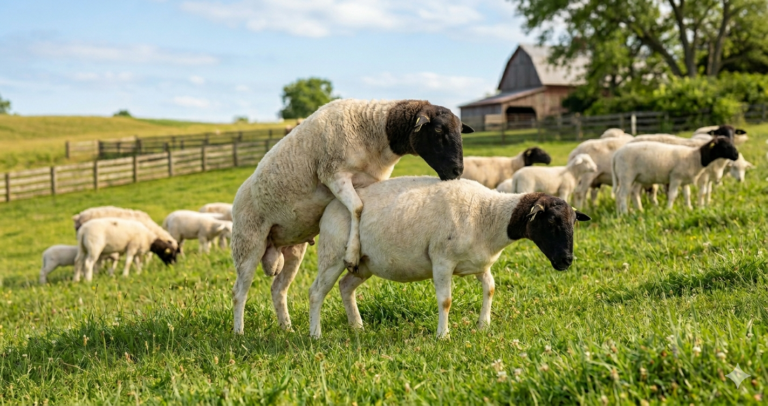
Sheep producers often focus heavily on growth rates and genetics, yet reproductive efficiency is what ultimately determines the long-term productivity of a flock. That reality explains why questions surrounding what age do Dorper sheep start breeding are among the most common asked by both new and experienced farmers. From the age at first mating to how long animals remain productive, understanding the breed’s reproductive timeline helps producers make better breeding and replacement decisions.
Table of Contents
What Age Can Dorper Sheep Breed?
Although Dorper sheep reach puberty relatively early, successful breeding depends on more than age alone. Under good nutrition and management, ewe lambs may become sexually mature between 6 and 8 months of age. However, many producers prefer to delay breeding until the animals have achieved adequate size and body condition.
Breeding very young females before they are sufficiently developed can negatively affect growth and future productivity. As a result, many commercial operations aim to mate replacement ewes at around 8 to 12 months of age.
Rams also reach sexual maturity at an early age, although most breeders wait until they are physically mature enough to handle breeding responsibilities effectively.
Factors That Influence Age at First Breeding
Reproductive maturity is influenced by more than genetics alone. Several management factors affect when sheep are ready to enter the breeding flock.
Nutrition
Adequate body condition score, proper mineral supplementation, and balanced nutrition all contribute to healthy reproductive development. Poor feeding can delay puberty and reduce fertility.
Genetics
Certain bloodlines exhibit earlier sexual maturity than others. Selecting animals from highly productive families can improve flock performance over time.
Health Status
Strong parasite control programs, vaccination schedules, and sound flock health support better reproductive performance and earlier maturity.
How Long Do Dorper Sheep Breed For?
One reason Dorper sheep have become popular worldwide is their impressive reproductive longevity. Healthy animals maintained under good management can remain productive for many years.
Ewes commonly continue producing lambs well into their later years, provided they maintain good health and adequate body condition. Likewise, breeding rams can remain useful for extended periods when properly managed.
Rather than focusing on age alone, experienced producers evaluate reproductive performance and overall health when deciding whether animals should remain in the breeding flock.
What Age Do Dorper Sheep Stop Breeding?
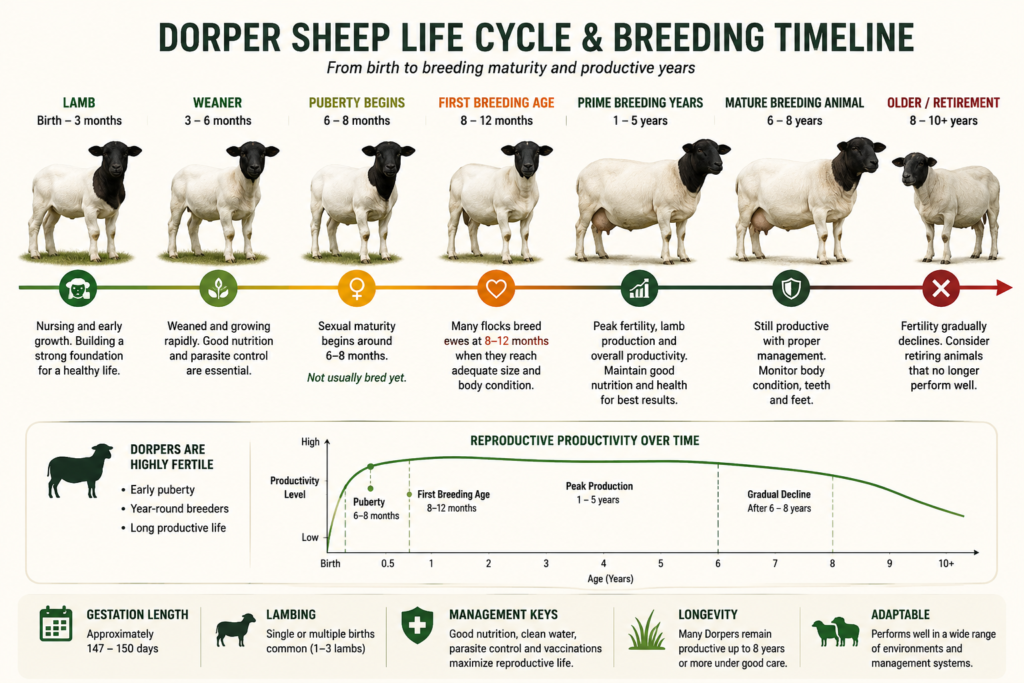
Unlike some production traits that decline sharply, reproductive performance usually decreases gradually. Most ewes remain productive between 6 and 8 years of age, although exceptional individuals may continue breeding successfully beyond that point.
Similarly, rams can remain fertile for many years if they maintain sound feet, strong structural conformation, and good health.
Eventually, declining fertility, poor teeth, reduced body condition, or lower lamb survival rates may indicate that animals should be culled from the breeding program.
Why Reproductive Longevity Matters
Maintaining productive breeding animals for longer periods can reduce replacement costs and improve flock profitability. Ewes with excellent maternal traits, consistent lambing records, and strong mothering ability often provide value far beyond their early years.
Likewise, rams that consistently sire high-performing offspring become important assets within breeding programs.
Because of this, successful producers often place as much emphasis on longevity and fertility as they do on growth and carcass traits.
Can Dorper Sheep Breed Throughout the Year?
Unlike strongly seasonal breeds, Dorpers are known for their extended breeding ability. Their reproductive cycle allows producers greater flexibility when planning lambing seasons and marketing strategies.
This characteristic makes the breed particularly attractive to commercial enterprises seeking more than one lamb crop every two years. Nevertheless, nutrition, climate, and management still influence breeding success.
What Role Does Body Condition Play in Breeding Success?
Even genetically superior animals struggle to perform well when nutritional requirements are not met. Maintaining an appropriate body condition score before mating helps support conception rates and healthier pregnancies.
Many producers practice flushing, a nutritional management technique involving increased feed levels before breeding to encourage improved ovulation and fertility.
Attention to nutrition before and during the breeding season often has a greater impact on flock productivity than expensive genetic investments alone.
Conclusion
Strong reproductive performance remains one of the defining strengths of the Dorper breed. Producers researching what age can Dorper sheep breed, what age do Dorper sheep stop breeding, and how long do Dorper sheep breed for will find that Dorpers combine early maturity with impressive longevity. With proper nutrition, sound health management, and careful selection, both ewes and rams can contribute to flock productivity for many years, making the breed one of the most practical options for commercial and small-scale sheep producers alike.