

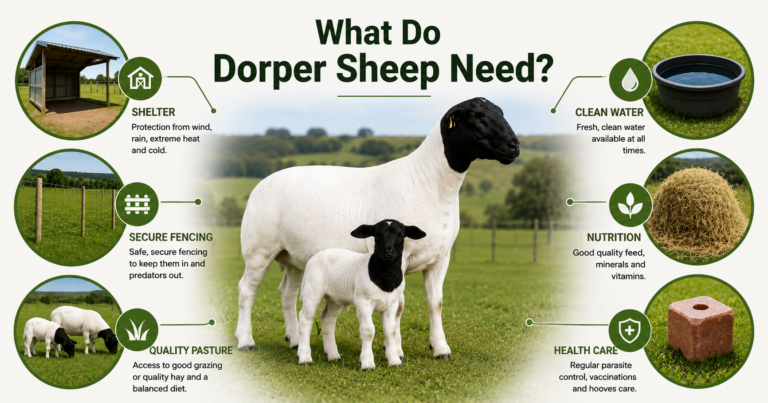
Successful Dorper sheep production depends on more than simply providing pasture and water. What do Dorper sheep need? Although Dorpers are among the hardiest sheep breeds, they still require proper nutrition, clean water, secure fencing, preventive health care, and suitable equipment. Farmers who consistently meet these requirements are more likely to achieve strong growth rates, healthy lambs, and profitable flock performance.
What Do Dorper Sheep Need to Eat?
Dorper sheep require quality forage as the foundation of their diet. Well-managed pastures supply much of the energy and nutrients needed for growth and reproduction. During periods of drought, winter, or forage shortages, supplementary feeds such as hay, silage, or concentrates may be necessary. Pregnant and lactating ewes generally have higher nutritional requirements than maintenance animals.
How Much Water Do Dorper Sheep Need?
Clean drinking water should be available at all times. Water consumption varies depending on weather conditions, feed type, age, and production stage. Lactating ewes typically consume more water than dry sheep. Dirty water sources can reduce intake and negatively affect health, growth, and reproductive performance.
Do Dorper Sheep Need Pasture?
Dorper sheep perform exceptionally well in grazing systems and can utilize a wide variety of forage species. Productive pasture supports lower feeding costs and healthier animals. Rotational grazing systems help maintain forage quality, improve pasture recovery, and reduce parasite burdens. Overstocking should be avoided to prevent pasture degradation and declining flock performance.
What Type of Fencing Do Dorper Sheep Need?
Secure fencing is essential for protecting sheep and preventing escapes. Woven wire fencing is commonly used because it effectively contains both adults and lambs. Many producers add electric wires to discourage rubbing and fence damage. Regular inspections help identify weak points before they become costly problems.
How High Should Dorper Sheep Fences Be?
Most Dorper flocks can be contained with fencing between 90 and 120 centimeters high. Areas housing breeding rams may require stronger construction due to increased pressure during the breeding season.
What Shelter Do Dorper Sheep Need?
Although Dorpers are known for their adaptability, they still benefit from protection against extreme weather. Shade structures, trees, windbreaks, and simple shelters can reduce heat stress and protect sheep during cold, wet conditions. Comfortable animals generally maintain better health and productivity.
What Veterinary Care and Vaccinations Do Dorper Sheep Need?
Routine veterinary care plays a major role in flock success. Farmers should establish vaccination programs appropriate for their region and disease risks. Regular parasite control, health monitoring, pregnancy management, and treatment of injuries help maintain productivity. Working with a veterinarian can reduce disease outbreaks and improve lamb survival rates.
What Equipment and Tools Do Dorper Sheep Need?
Even small sheep operations require basic equipment. Common tools include water troughs, feed troughs, handling pens, races, gates, weighing scales, ear tag applicators, drenching guns, syringes, hoof trimming shears, and livestock trailers. Larger commercial farms may also use tractors, pasture mowers, and feeding equipment to improve efficiency.
What Daily Management Do Dorper Sheep Need?
Daily observation remains one of the most important management practices. Farmers should monitor body condition, grazing behavior, water availability, signs of illness, and fencing conditions. Early detection of problems often prevents larger losses and reduces treatment costs.
Conclusion
What do Dorper sheep need? They require quality nutrition, clean water, productive grazing land, secure fencing, suitable shelter, preventive veterinary care, vaccinations, and the right farming equipment. While Dorper sheep are known for their hardiness, providing these essentials consistently is the key to maintaining a healthy, productive, and profitable flock.