

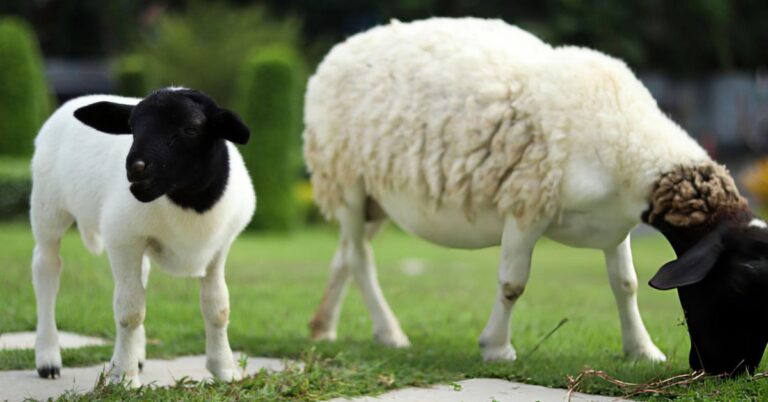
How fast do Dorper sheep grow? This is one of the most important questions for farmers because rapid growth directly affects production costs, market age, and farm profitability. Dorper sheep are among the fastest-growing meat sheep breeds in the world, having been specifically developed for efficient meat production under a wide range of environmental conditions. Their excellent growth performance, superior feed conversion, and strong genetic potential enable them to reach market weight faster than many traditional sheep breeds.
However, growth rate is influenced by far more than genetics alone. Nutrition, pasture quality, health, management, climate, and overall flock care all determine how quickly Dorper lambs gain weight. A well-managed flock receiving balanced energy, adequate protein, quality forage, continuous mineral supplementation, and effective health care will consistently outperform sheep raised under poor management conditions.
This guide explains the growth rate of Dorper sheep from birth to maturity, factors affecting growth, expected weight gains, and practical management strategies for maximizing productivity.
Table of Contents
Why Dorper Sheep Grow So Fast
Dorper sheep were developed in South Africa by crossing the Dorset Horn with the Blackhead Persian.
The objective was to combine:
- Rapid growth.
- Excellent meat production.
- Efficient feed conversion.
- Strong adaptability.
- Good fertility.
- Hardiness under dry conditions.
Decades of selective breeding have produced sheep capable of converting quality feed into lean muscle efficiently while maintaining excellent reproductive performance.
These characteristics continue to make Dorper sheep one of the world’s most popular commercial meat breeds.
Average Growth Rate of Dorper Lambs
Healthy Dorper lambs begin growing rapidly from birth.
Although growth varies according to management and nutrition, lambs typically experience their fastest growth during the first several months of life.
Under good management:
- Birth weight: 3–5 kg
- Weaning weight: 20–35 kg
- Four to six months: 30–50 kg
- Mature ewe: 60–90 kg
- Mature ram: 90–120 kg
Some outstanding breeding animals raised under intensive commercial systems may exceed these averages.
Growth Stages of Dorper Sheep
Understanding the different growth stages helps farmers provide appropriate nutrition and management throughout the production cycle.
Birth to One Month
The first month is critical for survival and early development.
During this period, lambs depend primarily on:
- Colostrum.
- Ewe’s milk.
- Warm housing.
- Good maternal care.
Healthy lambs begin nibbling pasture and creep feed within the first few weeks, promoting rumen development.
One to Three Months
Growth accelerates rapidly during this stage.
Milk remains the primary nutrient source, but lambs increasingly consume:
- High-quality forage
- Creep feed
- Clean drinking water
Proper nutrition during this period strongly influences future growth performance.
Three to Six Months
After weaning, lambs rely entirely on solid feed.
Balanced diets containing adequate:
- Energy
- Protein
- Mineral supplementation
support rapid muscle growth while maintaining excellent feed conversion.
Many commercial producers target this stage when preparing lambs for market.
Six Months to Maturity
Growth gradually slows as sheep approach mature body size.
Nutrients are increasingly used for:
- Body maintenance.
- Muscle development.
- Reproduction.
- Fat deposition.
Breeding animals should maintain an appropriate body condition score throughout adulthood.
Factors That Affect Dorper Sheep Growth Rate
Although Dorper sheep have excellent genetic potential, actual growth depends on several management and environmental factors.
Understanding these factors allows farmers to maximize growth performance while maintaining flock health and profitability.
Genetics
Genetics is the foundation of fast growth.
Lambs born from high-quality breeding rams and productive ewes generally demonstrate:
- Faster growth.
- Better feed conversion.
- Greater mature weights.
- Improved carcass quality.
Selecting breeding animals with proven performance records steadily improves flock productivity over future generations.
Nutrition
Nutrition has one of the greatest influences on growth rate.
Dorper sheep require balanced diets containing:
- Adequate energy
- High-quality protein
- Nutritious forage
- Continuous mineral supplementation
- Clean drinking water
Poor nutrition slows muscle development and delays market readiness.
Milk Production
During early life, the ewe’s milk supplies nearly all the nutrients required by the lamb.
Good milk production supports:
- Faster early growth.
- Strong immunity.
- Better rumen development.
- Higher weaning weights.
Healthy, well-fed ewes generally raise faster-growing lambs.
Creep Feeding
Introducing creep feed before weaning allows lambs to consume additional nutrients while still nursing.
Benefits include:
- Improved growth performance.
- Better feed conversion.
- Higher weaning weights.
- Earlier rumen development.
- Reduced weaning stress.
Commercial producers frequently use creep feeding to maximize pre-weaning growth.
Pasture Quality
Quality pasture provides digestible nutrients essential for rapid growth.
Improved pasture species such as:
- Rhodes grass
- Brachiaria
- Lucerne
- Mixed grass-legume pastures
support greater weight gains than poor-quality natural grazing.
When pasture quality declines, supplementary feeding becomes increasingly important.
Health Status
Healthy sheep utilize nutrients far more efficiently than animals affected by disease.
Common health problems that reduce growth include:
- Internal parasites
- Pneumonia
- Foot rot
- Digestive disorders
- Nutritional deficiencies
Routine health management protects growth while reducing production losses.
How to Increase Dorper Sheep Growth Rate
Rapid growth results from combining excellent genetics with sound management practices.
Farmers can improve growth by:
- Providing high-quality forage.
- Feeding balanced energy and protein.
- Supplying continuous mineral supplementation.
- Implementing effective rotational grazing.
- Practicing strategic internal parasite control.
- Following routine vaccination programmes.
- Maintaining clean drinking water.
- Reducing stress during handling.
These management practices allow sheep to express their full genetic growth potential.
Feed Conversion and Growth Rate
Growth rate and feed conversion are closely related.
Dorper sheep efficiently convert feed into lean muscle when diets are properly balanced.
Improving feed conversion helps farmers:
- Reduce feed costs.
- Increase daily weight gain.
- Reach market weight sooner.
- Improve profitability.
Balanced nutrition remains the key to maintaining excellent feed efficiency throughout the growing period.
Housing and Growth Performance
Comfortable housing contributes to faster growth by reducing environmental stress.
Good housing should provide:
- Dry flooring.
- Good ventilation.
- Protection from rain.
- Adequate shade.
- Clean bedding.
- Sufficient space.
Healthy housing conditions encourage better feed intake while reducing disease outbreaks that slow growth.
Seasonal Effects on Growth
Growth rates naturally fluctuate throughout the year as pasture availability changes.
Rainy Season
The rainy season usually produces abundant, nutritious pasture.
During this period, Dorper sheep often experience:
- Faster weight gain.
- Better feed conversion.
- Higher voluntary feed intake.
- Improved growth performance.
Surplus pasture can also be conserved as hay or silage for future use.
Dry Season
During the dry season, pasture quantity and quality often decline.
Growth can be maintained by providing:
- Hay.
- Silage.
- Concentrate feeds.
- Balanced protein supplements.
- Continuous mineral supplementation.
Strategic supplementation helps prevent growth setbacks until pasture improves.
Monitoring Growth Performance
Regular monitoring allows farmers to identify slow-growing animals before significant production losses occur.
Useful measurements include:
- Birth weight.
- Weaning weight.
- Monthly body weight.
- Average daily gain.
- Body condition score.
- Feed consumption.
- Health records.
Keeping accurate records helps evaluate nutrition, genetics, and overall flock management.
Common Mistakes That Slow Growth
Even high-quality Dorper genetics cannot overcome poor management.
Common mistakes include:
- Feeding poor-quality forage.
- Delaying supplementary feeding.
- Ignoring mineral supplementation.
- Poor internal parasite control.
- Overstocking grazing areas.
- Inadequate clean water.
- Poor pasture management.
- Delayed disease treatment.
- Selecting poor breeding stock.
- Weaning lambs before they are ready.
Correcting these problems often produces immediate improvements in growth rates.
How Fast Can Dorper Sheep Reach Market Weight?
One of the greatest advantages of Dorper sheep is their ability to reach market weight relatively quickly compared to many other sheep breeds.
Under good management, many lambs are ready for market between 5 and 8 months of age, depending on:
- Nutrition.
- Genetics.
- Production system.
- Target market weight.
- Overall flock health.
Commercial meat producers often monitor body weight regularly rather than relying solely on age when deciding the ideal marketing time.
Growth Rate in Different Production Systems
The production system has a major influence on how quickly Dorper sheep grow.
Intensive Production
Intensive systems provide the greatest opportunity for rapid growth because nutrition is carefully controlled.
These systems typically include:
- Balanced concentrate feeding.
- High-quality forage.
- Continuous mineral supplementation.
- Routine health management.
- Performance recording.
With optimal management, lambs generally achieve their highest growth performance under intensive production.
Semi-Intensive Production
Semi-intensive systems combine grazing with supplementary feeding.
Benefits include:
- Lower feed costs.
- Good pasture utilization.
- Consistent growth.
- Improved feed conversion.
This system is widely used because it balances productivity with operating costs.
Extensive Grazing
Under extensive grazing systems, growth depends largely on pasture quality and seasonal rainfall.
Where pasture becomes limited, supplementary feeding may be necessary to maintain satisfactory growth rates.
Proper rotational grazing and forage conservation help improve performance in extensive systems.
Growth Rate in Kenyan Conditions
Dorper sheep have adapted well to many regions of Kenya.
In high-rainfall counties with productive pasture, lambs often achieve excellent growth using improved grazing management combined with moderate supplementation.
In the arid and semi-arid lands (ASALs), growth depends more heavily on:
- Seasonal rainfall.
- Conserved forage.
- Strategic supplementary feeding.
- Effective drought management.
Farmers who prepare hay and silage during the rainy season generally maintain more consistent growth throughout the year.
Can Dorper Sheep Grow Quickly on Grass Alone?
High-quality pasture can support excellent growth during favorable seasons.
However, grass alone may not always provide sufficient nutrients for maximum production, particularly for:
- Growing lambs.
- Pregnant ewes.
- Lactating ewes.
- Breeding rams.
Strategic supplementation with:
- Energy
- Protein
- Mineral supplementation
helps maintain rapid growth when pasture quality declines.
Does Castration Affect Growth Rate?
Castration influences hormone production and may slightly alter growth patterns.
Intact rams generally develop muscle more rapidly because testosterone promotes lean tissue growth.
However, well-managed castrated lambs can still achieve excellent growth performance when provided with balanced nutrition and proper health care.
The choice between intact and castrated males depends on breeding objectives, management practices, and marketing requirements.
How Farmers Can Measure Growth
Monitoring growth allows producers to evaluate whether lambs are performing according to expectations.
Useful measurements include:
- Birth weight.
- Monthly live weight.
- Weaning weight.
- Average daily gain.
- Market weight.
- Body condition score.
- Feed intake.
- Health records.
Regular weighing helps identify slow-growing lambs while allowing farmers to adjust nutrition before performance declines.
Common Reasons Dorper Lambs Grow Slowly
Poor growth is usually the result of management challenges rather than genetics alone.
Common causes include:
- Poor-quality forage.
- Inadequate protein.
- Low energy intake.
- Mineral deficiencies.
- Heavy internal parasite burdens.
- Poor pasture management.
- Inadequate milk production.
- Delayed creep feeding.
- Disease outbreaks.
- Poor water availability.
- Overstocking grazing land.
- Heat stress.
Addressing these factors promptly helps restore normal growth.
Frequently Asked Questions
How fast do Dorper lambs grow?
Dorper lambs are among the fastest-growing meat sheep breeds and can achieve excellent weight gains when provided with balanced nutrition, good health management, and quality forage.
At what age are Dorper sheep ready for market?
Many Dorper lambs reach market weight between 5 and 8 months of age, depending on nutrition, genetics, production system, and target market requirements.
Do Dorper sheep grow faster than other breeds?
Yes. Compared with many traditional sheep breeds, Dorper sheep generally exhibit superior growth performance and more efficient feed conversion, making them highly popular for commercial meat production.
Does creep feeding improve growth?
Yes. Creep feeding increases nutrient intake before weaning, improves rumen development, raises weaning weights, and supports faster post-weaning growth.
Can pasture alone support rapid growth?
During periods of abundant, high-quality pasture, Dorper sheep can grow well on grazing alone. However, strategic supplementation often improves growth, particularly during dry seasons or periods of poor pasture quality.
What management practices improve growth rate?
Rapid growth is achieved through quality forage, balanced energy, adequate protein, continuous mineral supplementation, effective internal parasite control, routine vaccination programmes, clean water, good housing, and selecting superior breeding stock.
Conclusion
Dorper sheep are among the fastest-growing meat breeds in the world, making them an excellent choice for farmers seeking efficient and profitable lamb production. Their outstanding growth performance, superior feed conversion, and natural ability to convert quality feed into lean muscle allow them to reach market weight relatively quickly when managed correctly.
Achieving maximum growth requires more than good genetics alone. Farmers should provide high-quality forage, balanced energy, sufficient protein, continuous mineral supplementation, effective internal parasite control, routine vaccination programmes, clean drinking water, and well-managed grazing systems to support uninterrupted development from birth to maturity.
Whether raised under intensive, semi-intensive, or extensive production systems, Dorper sheep reward good management with rapid weight gain, excellent carcass quality, and strong economic returns. By regularly monitoring body weight, maintaining flock health, and adjusting nutrition according to production stage, farmers can fully realize the impressive growth potential that has made the Dorper one of the world’s leading commercial meat sheep breeds.