

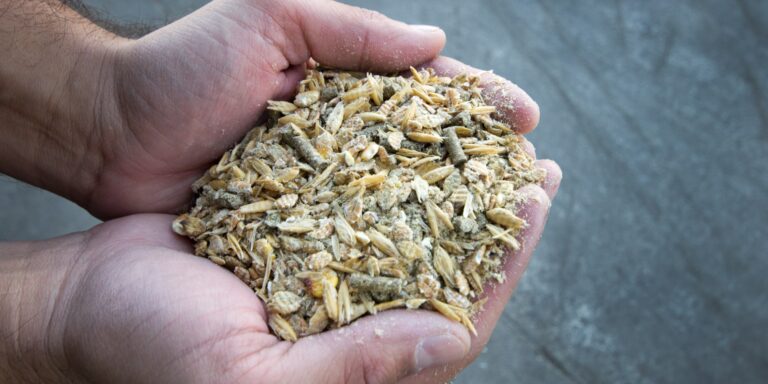
Creep feeding Dorper lambs is one of the most effective nutritional strategies for improving pre-weaning growth, increasing weaning weights, and producing healthier, more productive lambs. While Dorper ewes provide excellent milk during early lactation, milk production naturally declines as lambs grow, making supplementary nutrition increasingly important before weaning. A well-managed creep feeding programme bridges this nutritional gap by allowing lambs to consume high-quality feed that is inaccessible to adult sheep.
Providing creep feed at the right age encourages early rumen development, improves feed conversion, supports faster growth performance, and reduces nutritional stress during weaning. When combined with quality pasture, good ewe nutrition, and sound flock management, creep feeding can significantly improve the overall profitability of Dorper sheep production.
This guide explains how creep feeding works, when to introduce it, suitable feed ingredients, feeder design, management practices, and how to maximize lamb growth before weaning.
Table of Contents
What Is Creep Feeding in Dorper Lambs?
Creep feeding is a feeding system that allows young lambs to access high-quality supplementary feed while preventing adult sheep from eating it.
This is achieved by placing concentrate feed inside a specially designed creep feeder or creep pen with openings large enough for lambs to enter but too small for mature ewes.
The objective is not to replace the ewe’s milk but to supplement it as lambs grow and their nutritional requirements increase.
A successful creep feeding programme helps lambs:
- Develop the rumen earlier.
- Increase voluntary feed intake.
- Achieve faster growth performance.
- Improve feed conversion.
- Experience less stress during weaning.
Because Dorper lambs are naturally fast-growing meat animals, creep feeding helps them express more of their genetic growth potential.
Why Creep Feeding Dorper Lambs Is Important
During the first few weeks after birth, ewe’s milk supplies nearly all of a lamb’s nutritional requirements.
As lambs grow, however, their nutrient requirements increase rapidly while milk production gradually declines. High-quality creep feed provides the additional energy and protein needed to support continued muscle development and healthy rumen function.
A well-managed creep feeding programme offers several advantages:
- Higher weaning weights.
- Faster pre-weaning growth.
- Better feed conversion.
- Earlier rumen development.
- Reduced weaning stress.
- Improved flock uniformity.
- Better market readiness.
- Increased profitability.
Creep feeding is especially beneficial for twin lambs, orphan lambs, and lambs raised during periods when pasture quality is poor.
When Should Dorper Lambs Start Creep Feeding?
Lambs begin exploring solid feeds within the first few weeks of life, although milk remains their primary nutrient source during this period.
Most producers introduce creep feed when lambs are approximately two to three weeks old. At this stage, lambs become increasingly curious and begin nibbling small quantities of concentrates and forage.
Early exposure encourages rumen development without reducing milk intake.
The ideal time to introduce creep feeding depends on several factors, including:
- Milk production of the ewe.
- Lamb growth rate.
- Pasture availability.
- Production objectives.
- Weaning age.
Providing creep feed before milk production declines allows lambs to transition gradually onto solid feeds while maintaining steady growth.
How Creep Feeding Supports Rumen Development
Young lambs are born with an undeveloped rumen because milk bypasses the rumen and flows directly to the abomasum during suckling.
As lambs begin consuming solid feed, fermentation within the rumen stimulates the growth of beneficial microorganisms and the development of rumen papillae responsible for nutrient absorption.
Earlier rumen development provides several benefits:
- Improved digestion.
- Better nutrient utilization.
- Higher voluntary feed intake.
- Reduced weaning stress.
- Faster adaptation to forage-based diets.
High-quality creep feed accelerates this natural developmental process while preparing lambs for successful weaning.
Benefits of Creep Feeding Dorper Lambs
A properly managed creep feeding programme delivers both biological and economic advantages.
Faster Growth Rates
Supplementary nutrients allow lambs to continue growing rapidly even as milk production declines.
Improved growth performance enables lambs to reach target weaning weights sooner while maintaining excellent body condition.
Higher Weaning Weights
Lambs receiving creep feed generally achieve heavier weaning weights than lambs relying solely on milk and pasture.
Heavier lambs often perform better after weaning because they have already adapted to consuming solid feed.
Improved Feed Conversion
Young lambs convert nutrients into lean muscle very efficiently.
Providing balanced creep feed during this stage improves feed conversion, allowing more efficient growth before weaning.
Reduced Weaning Stress
Lambs already accustomed to concentrates experience less nutritional shock after separation from their mothers.
This smoother transition helps maintain appetite while reducing growth setbacks commonly associated with weaning.
Better Market Performance
Commercial producers often benefit from:
- More uniform lamb groups.
- Improved finishing rates.
- Reduced time to market.
- Greater profitability.
Lambs reaching market weight earlier also reduce overall feeding costs per kilogram of weight gain.
Best Creep Feed Ingredients for Dorper Lambs
The success of a creep feeding programme depends largely on feed quality. Creep feed should be highly palatable, easy to digest, and nutritionally balanced to encourage young lambs to consume small amounts frequently throughout the day.
A good creep ration should contain adequate energy, protein, vitamins, minerals, and small quantities of quality forage to promote healthy rumen development.
Common creep feed ingredients include:
Energy Sources
Energy provides the fuel required for rapid growth and daily activity.
Suitable energy ingredients include:
- Maize bran
- Maize germ
- Wheat bran
- Barley bran
- Crushed maize
These ingredients should be included in balanced proportions to support efficient feed conversion without causing digestive disturbances.
Protein Sources
Growing lambs require relatively high levels of protein for muscle development and tissue growth.
Common protein supplements include:
- Lucerne meal
- Lucerne pellets
- Soybean meal
- Sunflower cake
- Canola cake
- Cottonseed cake
Adequate protein intake supports healthy skeletal development while improving overall growth performance.
Mineral Supplements
Balanced mineral supplementation is essential for proper bone development, immunity, and metabolic function.
A quality lamb mineral mix should supply:
- Calcium
- Phosphorus
- Zinc
- Selenium
- Magnesium
- Sodium
Minerals should always be provided according to nutritional requirements and manufacturer recommendations.
Fresh Water
Lambs consuming concentrates require continuous access to clean, fresh drinking water.
Adequate water intake improves digestion, feed utilization, and rumen development.
How to Set Up a Creep Feeding Area
A well-designed creep feeding area encourages lambs to eat while preventing adult sheep from consuming the feed.
The creep feeder should be placed in a quiet, dry location where lambs naturally spend time with their mothers.
The entrance should allow lambs to enter comfortably while preventing mature ewes from accessing the feed.
An effective creep feeding area should provide:
- Easy access for lambs.
- Protection from rain and direct sunlight.
- Clean feeding troughs.
- Dry flooring.
- Good ventilation.
- Adequate feeding space.
Feed should be replenished regularly to maintain freshness and encourage consistent intake.
Introducing Lambs to Creep Feed
Young lambs are naturally curious, but they often consume only small quantities of creep feed during the first few days.
Farmers should allow lambs to investigate the feed without forcing them to eat.
Introducing small amounts of fresh feed each day encourages exploration while reducing waste.
Several management practices improve acceptance:
- Place feeders where lambs frequently rest.
- Keep feed fresh and clean.
- Remove spoiled feed daily.
- Avoid sudden ration changes.
- Allow lambs unrestricted access throughout the day.
Consumption increases gradually as lambs grow and milk production from the ewe begins to decline.
How Much Creep Feed Should Dorper Lambs Eat?
Feed intake increases steadily with age.
Young lambs initially consume only a few mouthfuls each day, but intake rises rapidly as the rumen develops and milk intake decreases.
Rather than restricting feed, farmers should allow lambs free access to fresh creep feed while monitoring growth and feed consumption.
Actual intake varies depending on:
- Lamb age.
- Milk production of the ewe.
- Pasture quality.
- Breed genetics.
- Health status.
- Weather conditions.
The objective is to encourage gradual increases in feed intake while maintaining excellent rumen health.
Weaning Lambs After Creep Feeding
One of the greatest advantages of creep feeding is the smoother transition from milk to solid feed.
Lambs already consuming concentrates before weaning usually maintain appetite and continue growing with minimal interruption after separation from the ewe.
During weaning, farmers should:
- Continue providing the same creep ration initially.
- Ensure constant access to quality forage.
- Supply clean drinking water.
- Maintain mineral supplementation.
- Avoid sudden dietary changes.
Gradual feed transitions reduce digestive upset while supporting continued growth after weaning.
Common Mistakes Farmers Make When Creep Feeding
Although creep feeding is straightforward, poor management can reduce its effectiveness.
Common mistakes include:
- Introducing creep feed too late.
- Feeding poor-quality or moldy feed.
- Allowing ewes to access the creep feeder.
- Neglecting feeder hygiene.
- Making sudden ration changes.
- Providing insufficient clean water.
- Overcrowding feeding areas.
- Ignoring lamb health problems that reduce feed intake.
- Allowing feed to become stale or contaminated.
Routine cleaning and careful observation help maintain consistent feed intake while minimizing disease risks.
Creep Feeding Dorper Lambs in Kenya
Creep feeding can be particularly valuable in Kenya where seasonal pasture quality varies considerably between regions.
In high-rainfall counties, lambs often benefit from creep feeding during periods when pasture becomes mature and less nutritious despite appearing abundant.
In the arid and semi-arid lands (ASALs), supplementation becomes even more important during prolonged dry seasons when milk production declines because of limited forage availability.
Smallholder farmers can develop cost-effective creep feeding programmes using locally available ingredients such as maize bran, wheat bran, lucerne, sunflower cake, and commercial sheep mineral supplements.
Commercial producers frequently combine creep feeding with improved pasture management, strategic supplementation, and performance recording to maximize weaning weights and improve flock uniformity.
Working with livestock nutritionists and extension officers can help farmers formulate economical creep rations using locally available feed resources.
Frequently Asked Questions
At what age should Dorper lambs start creep feeding?
Most lambs begin creep feeding at approximately two to three weeks of age, although they continue relying primarily on milk during the early stages.
Does creep feeding replace the ewe’s milk?
No. Creep feeding supplements the ewe’s milk rather than replacing it. Milk remains the primary source of nutrition until lambs gradually increase solid feed intake.
What is the best creep feed for Dorper lambs?
A balanced creep ration should contain adequate energy, protein, quality mineral supplementation, and highly digestible ingredients that encourage rumen development.
Does creep feeding increase weaning weight?
Yes. Properly managed creep feeding generally improves growth performance, increases weaning weights, and supports more consistent lamb growth before weaning.
Should lambs have access to hay while creep feeding?
Yes. Small amounts of high-quality forage help stimulate healthy rumen development and support normal digestive function.
Is creep feeding profitable?
For many commercial producers, creep feeding is profitable because faster-growing lambs often reach market weight sooner, improve flock uniformity, and increase overall production efficiency.
Conclusion
Creep feeding Dorper lambs is an effective nutritional strategy for improving pre-weaning growth performance, increasing weaning weights, and supporting healthy rumen development. By providing highly digestible energy, protein, quality forage, continuous mineral supplementation, and clean water, farmers can help lambs transition smoothly from milk to solid feed while maintaining steady growth throughout the pre-weaning period.
Successful creep feeding depends on introducing lambs to supplementary feed at the appropriate age, maintaining clean and well-designed creep feeding areas, and using balanced rations that meet the nutritional demands of rapidly growing lambs. Careful management during this stage also reduces weaning stress, improves feed conversion, and prepares lambs for continued growth after separation from their mothers.
Whether raising Dorper sheep under smallholder or commercial production systems, a well-managed creep feeding programme can significantly improve flock productivity, enhance market performance, and increase the overall profitability of sheep farming.