

If you’ve spent any time researching Dorper sheep, you’ve likely come across glowing descriptions of their hardiness, fast growth rates, and low-maintenance wool-shedding coats. But before you commit pasture space and fence posts to a new flock, one question deserves a straight answer: what are Dorper sheep actually like to handle?
Temperament matters more than most first-time sheep producers expect. A flighty, stress-prone ewe is harder to work through a handling system, harder to assess at lambing, and more likely to abandon lambs when pressured. An aggressive ram can injure handlers, damage infrastructure, and create serious safety problems in operations where children or inexperienced workers are present.
The honest answer is that Dorper sheep sit in a useful middle ground — generally calmer than many range breeds, but not without individual variation and season-specific behaviors that every farmer needs to understand before turning them out.
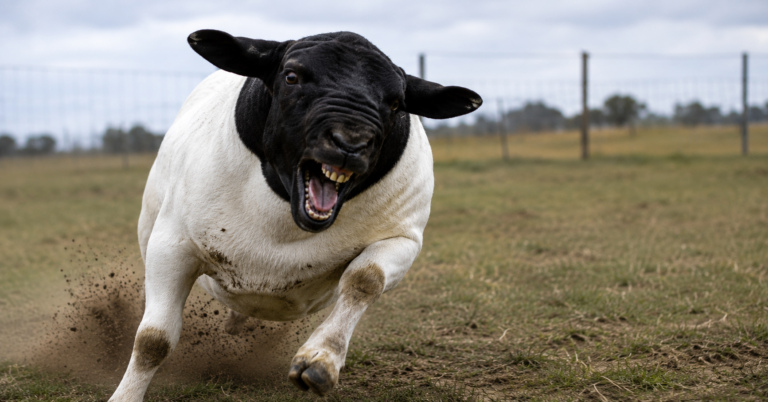
Are Dorper Sheep Aggressive?
Dorper sheep are not considered an aggressive breed under normal management conditions. In commercial operations across South Africa, Australia, and the United States, Dorpers are consistently described as manageable and reasonably cooperative in handling facilities. That said, calling any livestock breed universally non-aggressive would be misleading.
Ewes can display defensive behavior at lambing, particularly around newborns. This is maternal instinct, not a breed fault, and it’s common across virtually all sheep breeds. The behavior typically fades within the first few days post-lambing once the ewe settles. What matters more is how the animal was raised — sheep that have had regular, low-stress human contact from a young age are generally easier to approach and move throughout their lives.
Overcrowding, poor nutrition, and abrupt handling can trigger defensive responses in any sheep. Dorpers managed under poor conditions may appear more reactive than the breed’s reputation suggests, which is why attributing behavior to genetics alone misses the larger picture of management quality.
Are Dorper Sheep Friendly?
Dorpers won’t follow you around a paddock the way a bottle-raised lamb will, but they’re not the flighty, scatter-prone animals you see in some fine-wool Merino operations. For a commercial meat breed, they are notably cooperative — and that has real value when you’re processing a mob through a drafting race or conducting routine health checks.
Producers who handle their Dorpers frequently from early ages often report that the sheep become reasonably comfortable with human presence. Ewes that have been worked through a shed regularly, vaccinated on schedule, and assessed at weaning tend to develop what might fairly be called a workable tolerance — they don’t run from handlers, they respond well to yard dogs, and they move through handling equipment without excessive pressure.
That said, Dorpers are not a “pet breed.” They retain the independence and self-reliance that makes them such effective rangeland animals. A ewe that raised her lambs on open range with minimal intervention won’t be as approachable as one managed intensively. Both can be managed safely, but they call for different handling techniques.
Are Dorper Rams Aggressive?
This is where the temperament conversation requires more care. Dorper rams — like rams of any breed — can become aggressive, particularly during the breeding season. Testosterone-driven behavior during joining means that rams which are calm and manageable outside the rut may become pushy, unpredictable, or outright dangerous when ewes are cycling.
Experienced sheep producers know never to fully trust a ram, regardless of breed. A Dorper ram that you’ve worked around for two years without incident can still charge when his attention is elsewhere or when he perceives you as a competitor. This is not unique to Dorpers — it’s ram behavior, and it demands consistent vigilance.
Some management practices that reduce ram aggression risk include avoiding hand-feeding rams (which encourages them to associate humans with food rewards and can lead to pushy behavior), maintaining rams in bachelor groups rather than alone, and ensuring rams have adequate space during non-joining periods. Ram-on-ram aggression is also common when introducing unfamiliar males, so any integration should be done carefully with space and monitoring.
Working alone with a ram in a confined space is never advisable, regardless of the animal’s prior behavior. A solid drafting gate and proper yard design are among the most cost-effective safety tools on any sheep operation.
Are Dorper Sheep Docile?
By commercial sheep breed standards, Dorpers rank reasonably well on the docility scale. Breed development in South Africa prioritized adaptability and practical management alongside production traits, and that philosophy shows in how Dorpers behave in working yards compared to some more reactive breeds.
In research contexts and producer surveys, Dorpers are frequently noted for their calm response to mustering and their ability to settle quickly after handling events. This matters at pregnancy scanning, shearing (for White Dorpers with partial fleece), drenching, and foot inspection. Animals that calm down quickly after being worked reduce the cortisol load and associated production impacts that stressed sheep experience.
Docility, however, is partly heritable and partly learned. If you’re selecting rams for your operation, observe how the animal behaves in the yards during inspection — not just his physical conformation and estimated breeding values. A sire that requires three people to hold him during assessment is passing on more than his growth genetics. Selecting for calm temperament alongside production traits is a legitimate and practical breeding decision, and many stud breeders now note temperament observations in their sale catalogues.
Results will always vary based on individual animals, bloodlines, early handling history, nutrition, and the management system they’re raised in. A Dorper lamb that has had quiet, consistent human contact from its first week is a different animal to work with than one raised on extensive range with minimal handling.
Practical Tips for Managing Dorper Temperament on Farm
Understanding the breed’s general disposition is one thing; managing it practically is another. A few principles that experienced Dorper producers consistently apply:
Low-stress handling works. Dorpers respond well to low-pressure stockmanship. Working within their flight zone, using yard dogs calmly, and avoiding excessive noise significantly reduces stress responses at mustering and in the yards. Bud Williams-style stockmanship principles translate effectively to Dorper operations.
Consistency builds confidence. Regular, non-threatening interactions — walking through mobs, checking water points, conducting visual assessments — accustom animals to human presence and reduce reactivity over time.
Separate rams before they become problems. Moving rams out of mob paddocks outside of joining windows reduces aggression risk and keeps rams in better body condition for the next mating period.
Watch for outliers. Any flock will have individuals that are more reactive than the group norm. An ewe that is consistently difficult to handle is unlikely to improve with age — and her behavioral traits may have a heritable component worth factoring into culling decisions.
Infrastructure matters. Well-designed yards with solid sides (so sheep can’t see distractions outside the race), correctly positioned forcing gates, and adequate shade and water in holding areas all reduce behavioral problems that have nothing to do with breed temperament.
Conclusion
Dorper sheep are not aggressive by breed standard, and under sound management they are among the more workable commercial meat breeds available to farmers. They are not universally docile in the way that some producers expect from reading breed promotional material, but they are practical animals that respond well to calm, consistent handling.
Rams require the respect and caution that all rams deserve — seasonally elevated testosterone makes even the most manageable male unpredictable, and any operation that becomes complacent about ram safety is an operation waiting for an injury. Ewes are generally cooperative outside of the lambing period and become more so with regular human contact from an early age.
If you’re considering Dorpers and wondering whether their temperament will suit your operation, the honest answer is: almost certainly yes, provided you apply basic livestock management principles, select for temperament alongside production traits, and design your handling infrastructure to work with the animals rather than against them. Like everything in farming, the results you get from Dorper sheep reflect the management you put in.