

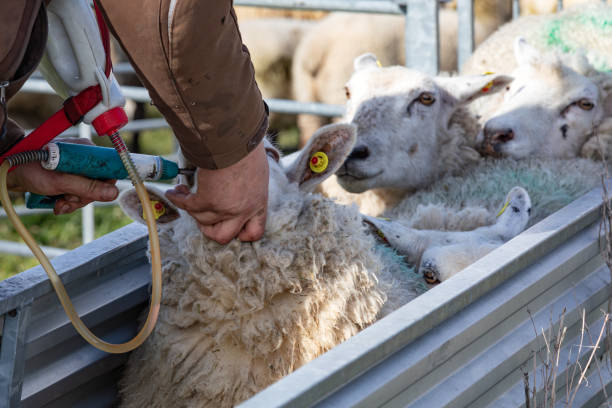
A Dorper sheep deworming schedule that works on paper rarely survives contact with Kenya’s rainy season. Producers who treat every animal on the same calendar date, regardless of pasture conditions or individual exposure, often watch resistant worm populations build up within a few seasons. Getting parasite control right means matching treatment timing to your specific grazing system, climate, and flock history rather than following a generic template pulled from a product label.
Dorpers carry a reputation as hardy, low-maintenance animals, and that reputation is well earned when it comes to coat shedding and adaptability to heat. Internal parasites are a different story. Haemonchus contortus, the barber’s pole worm, thrives in Kenya’s warm, humid grazing belts and can cause severe anemia in lambs and lactating ewes within weeks if left unchecked. A sound deworming program protects growth rates, lambing percentages, and ultimately the carcass quality buyers pay for.
Table of Contents
Why Generic Deworming Calendars Fail Kenyan Flocks
Most printed deworming schedules originate from temperate-climate research where parasite life cycles slow dramatically during cold winters. Kenya doesn’t get that natural break. In counties like Nyandarua, Nakuru, and parts of Laikipia with reliable rainfall, parasite control needs to account for nearly year-round larval survival on pasture.
The bigger issue with blanket calendars is that they treat every animal identically regardless of actual worm burden. Some ewes carry naturally stronger resistance and shed far fewer eggs than their pen mates. Deworming a low-burden animal alongside a heavily infected one wastes product and accelerates resistance, since the parasites surviving in the resistant animal’s gut are the ones most likely to pass resistance genes forward.
How Often Should Dorper Sheep Be Dewormed?
There’s no single correct interval that fits every farm. On extensive grazing systems in drier ASAL counties such as Marsabit or Isiolo, where pasture is sparse and stocking density is naturally low, three to four strategic treatments per year often suffice. On semi-intensive or intensive setups with higher stocking rates and lush, frequently irrigated pasture, monthly monitoring with treatment triggered by actual signs of infection works better than fixed dosing.
The practical approach most successful commercial breeders use is targeted selective treatment. Rather than deworming the whole flock on a set date, animals are individually assessed using the FAMACHA eye-color scoring system, which correlates conjunctival color with anemia severity from Haemonchus infection. Only animals scoring in the moderate-to-severe anemia range receive treatment. This single shift can cut total dewormer use by 40 to 60 percent on many farms while still protecting the animals that genuinely need it.
What Times of Year Carry the Highest Worm Risk?
Larval populations on pasture spike roughly two to three weeks after sustained rainfall, when moisture and warmth combine to trigger mass hatching of eggs deposited in manure. For most of Kenya’s agricultural zones, that means the long rains period from March through May and the short rains from October through December represent peak risk windows.
Lambing season compounds this risk. Ewes experience a temporary drop in immunity around parturition known as the periparturient egg rise, where worm egg output increases sharply in the weeks before and after lambing even in animals that appeared well controlled beforehand. Strategic treatment timed to late pregnancy, roughly two to three weeks before expected lambing dates, helps blunt this surge and protects newborn lambs from heavy pasture contamination during their most vulnerable weeks.
Building a Practical Treatment Calendar
A workable schedule for a mixed-age commercial flock on moderate stocking density typically includes these checkpoints, adjusted to local rainfall patterns:
- Pre-breeding treatment for ewes, timed roughly four to six weeks before joining with the ram
- Late-pregnancy treatment two to three weeks before lambing
- Post-weaning treatment for lambs, since young animals lack the acquired immunity adult sheep develop
- Monitoring-triggered treatment during peak rainfall windows based on FAMACHA scoring or fecal egg counts
Weaned lambs deserve particular attention. They haven’t yet built the partial immunity that protects mature sheep, and heavy worm burdens at this stage can permanently stunt growth performance even after treatment. Many producers find that pulling weaned lambs onto clean pasture that hasn’t carried sheep for several months, sometimes through rotation with cattle, reduces their reliance on chemical treatment substantially.
Rotating Dewormer Classes Without Guessing
Resistance develops fastest when the same active ingredient gets used repeatedly without variation. The three broad chemical classes available, benzimidazoles, levamisole-group products, and macrocyclic lactones such as ivermectin, work through different mechanisms, and rotating between classes by treatment cycle rather than mid-cycle helps preserve effectiveness longer.
Before committing to a rotation strategy, a fecal egg count reduction test gives a far better picture of which products still work on your specific farm than assumptions based on packaging claims. This involves testing egg counts before treatment and again ten to fourteen days afterward. A drop of less than 95 percent suggests resistance is already established against that product on your pasture, information worth knowing before investing further in a compound that’s no longer doing its job. A basic fecal flotation kit suitable for on-farm monitoring runs roughly KES 3,500 to 6,000 (around USD 27 to 46), a modest cost against the losses a resistant worm population can cause across a flock.
Pasture Management as the First Line of Defense
No deworming schedule, however well designed, compensates for grazing management that keeps reinfecting the flock. Rotational grazing that rests paddocks for at least 30 to 45 days breaks a meaningful portion of the parasite life cycle, since infective larvae have a limited survival window on pasture without a host.
Stocking density matters as much as rotation length. A flock concentrated on a small paddock, even briefly, deposits far more eggs per square meter than the same animals spread across a full hectare (roughly 2.5 acres). Farms running close to one ewe per 0.4 hectare in high-rainfall zones typically see heavier worm pressure than those managing closer to one ewe per hectare, all else being equal.
Browse-based grazing, where sheep have access to shrubs and woody vegetation above the typical larval zone near ground level, also reduces exposure meaningfully since most infective larvae stay within the bottom few centimeters of grass.
Conclusion
A Dorper sheep deworming schedule earns its keep by matching treatment to actual risk rather than a fixed date on a calendar. Combining FAMACHA monitoring or fecal egg counts with strategic timing around lambing and peak rainfall, rotating chemical classes deliberately, and managing pasture rest periods will do more for flock health than any rigid dosing chart. Results will vary with stocking density, local rainfall patterns, and the resistance status already present on a given farm, so periodic testing rather than guesswork should guide every adjustment to the program over time.
Dorper sheep deworming schedule, Dorper parasite control, FAMACHA scoring sheep, Haemonchus contortus Kenya, sheep deworming Kenya, rotational grazing parasite control, dewormer resistance sheep