

Breed upgrading in Dorper sheep is a long-term process. Many producers assume that buying a pure Dorper ram instantly transforms a flock, but genetics work progressively. Repeated mating to quality sires over several generations gradually increases the percentage of Dorper blood while allowing farmers to select animals that perform well under local conditions.
Purposeful breeding is not about producing more sheep. It is about producing sheep that are better suited to the environment, management system, and market demands. Every mating should have a clear objective.
Table of Contents
What Is Breed Upgrading?
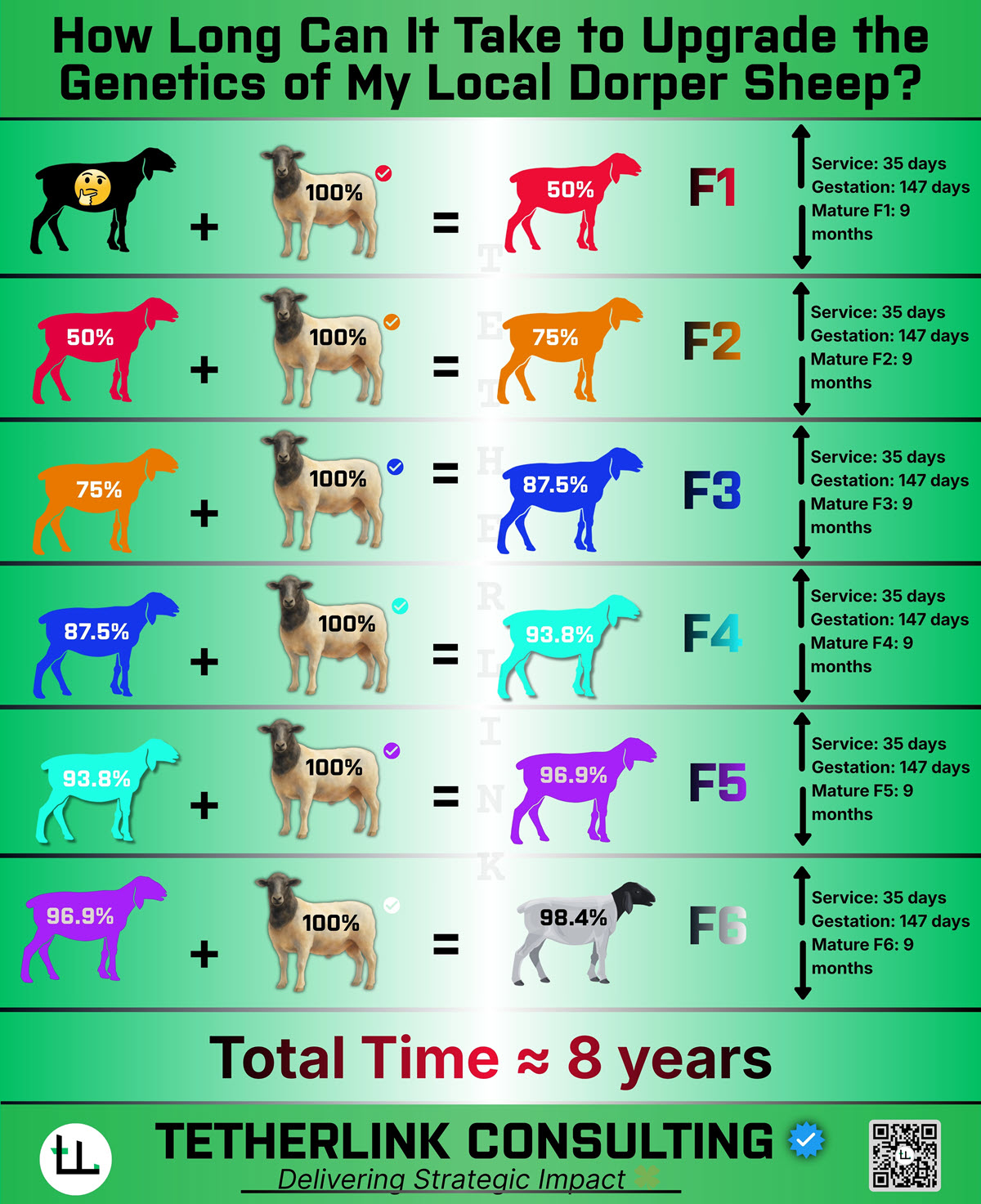
Breed upgrading involves mating local or non-Dorper ewes with carefully selected purebred Dorper rams.
The process produces:
- F1 offspring (50% Dorper)
- F2 offspring (75% Dorper)
- F3 offspring (87.5% Dorper)
- F4 offspring (93.8% Dorper)
- F5 offspring (96.9% Dorper)
- F6 offspring (98.4% Dorper)
With proper management and generation intervals, reaching nearly pure Dorper genetics may take around seven to eight years.
The goal is not simply to achieve a high percentage. The goal is to build a flock that combines Dorper productivity with adaptation to local conditions.
Every Mating Should Improve the Flock
Good breeding is cumulative. Each generation should contribute improvements in:
- Fertility
- Growth rate
- Mothering ability
- Carcass quality
- Adaptability
- Longevity
- Parasite resistance
- Structural soundness
If a mating does not improve these traits, it is not genetic progress. It is merely repetition.
Why Breed Upgrading Benefits Meat Producers
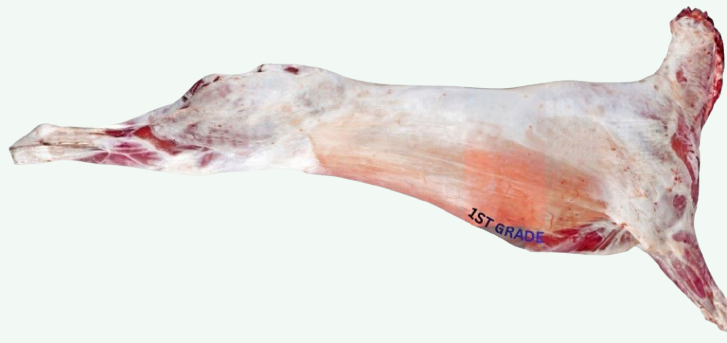
Breed upgrading is particularly attractive for farmers producing lamb for meat.
As Dorper influence increases, many flocks experience:
- Faster growth rates.
- Better feed conversion.
- Earlier finishing.
- Heavier slaughter weights.
- Improved carcass yield.
- More kilograms of meat sold per animal.
This means animals can often reach market weight sooner, reducing the time and cost required to produce each kilogram of meat. For commercial meat producers, improving genetics translates directly into increased productivity and profitability.
Breed Upgrading Also Creates Opportunities for Breeders
Purposeful breeding does not only benefit farmers selling lambs for slaughter. It can also create opportunities for those wishing to become breeders.
A well-managed upgrading program eventually produces high-quality crossbred rams that other producers can use to improve their own flocks. Farmers may also exchange or sell replacement females to introduce fresh genetics and reduce inbreeding.
In this way, a flock can generate value beyond meat production by supplying:
- Breeding rams.
- Replacement ewes.
- Crossbred females for flock expansion.
- Genetics for rotational breeding systems.
Good genetics become a product in their own right.
Avoid Inbreeding by Changing Rams
One of the most important principles in breed upgrading is avoiding inbreeding.
A ram should never be used on his daughters or close female relatives. As replacement females enter the breeding flock, best practice is to introduce unrelated rams.
Changing sires between generations helps:
- Maintain genetic diversity.
- Reduce inherited defects.
- Improve hybrid vigor.
- Sustain fertility and growth performance.
Using the same ram generation after generation may increase the percentage of Dorper blood, but it also increases the risk of inbreeding depression, reduced fertility, and weaker lambs.
Purposeful Breeding Requires Selection
Not every animal born deserves to become a parent.
Selection pressure is what separates genetic improvement from simple multiplication.
Farmers should retain only animals that consistently outperform their contemporaries.
Three Performance Indicators That Matter Most
1. Reproductive Performance
Fertility is non-negotiable.
Ewes that repeatedly fail to conceive, lose lambs, or show poor mothering ability should not remain in the breeding flock.
Likewise, rams with poor libido or low conception rates should be culled.
Without reproduction, no other trait matters.
2. Growth Rate and Feed Efficiency
Fast-growing animals are generally more profitable.
Lambs raised under the same conditions should reach breeding or market weights at similar ages. Animals that consistently lag behind their contemporaries are signalling inferior genetics or poor feed conversion.
Breeding from slow-growing animals gradually reduces flock productivity.
For farmers targeting the meat market, faster growth means animals reach slaughter weight earlier and add more kilograms over their lifetime. Those are traits worth preserving and multiplying.
3. Structural and Functional Soundness
Physical defects are highly heritable.
Animals showing:
- Weak legs.
- Poor feet.
- Jaw abnormalities.
- Bad udders.
- Defective teats.
should not be used for breeding.
Sound animals live longer, require less intervention, and remain productive for many years.
A Fourth Trait Worth Selecting For: Parasite Resistance
As internal parasites become a growing challenge, many producers are placing greater emphasis on resistance and resilience.
Animals that maintain body condition and continue performing under parasite pressure deserve special attention.
Selecting for parasite resistance can:
- Reduce deworming costs.
- Slow the development of drug resistance.
- Improve survival rates.
- Increase overall flock resilience.
This trait becomes especially valuable in humid and high-parasite regions.
Percentage Does Not Equal Quality
A 98% Dorper animal is not automatically superior to an 87.5% animal.
Performance matters more than percentages.
An animal with excellent fertility, strong feet, rapid growth, and resistance to disease will contribute more to flock improvement than a higher-percentage animal with structural defects or poor productivity.
The best breeders focus on performance first and pedigree second.
Common Mistakes During Breed Upgrading
Keeping Every Female Lamb
Not every replacement ewe should enter the breeding flock. Poor performers should be culled.
Using the Same Ram Too Long
Father-to-daughter matings increase inbreeding and reduce long-term progress.
Introducing unrelated rams as generations advance is considered best practice.
Selecting on Appearance Alone
Large size and attractive coloration do not guarantee productivity.
Ignoring Records
Without records, breeding decisions become guesswork.
Chasing Percentages Instead of Performance
Genetic percentages are useful, but profitability comes from functional animals that thrive under the farm’s conditions.
Purposeful Breeding Creates Lasting Progress
Breed upgrading is a marathon rather than a sprint. It requires patience, disciplined selection, and clear breeding objectives.
The most successful Dorper producers do not ask, “How many sheep do I have?”
They ask:
“Are the sheep I am producing more fertile, faster growing, structurally sound, and better adapted than the generation before?”
For meat producers, the answer is measured in heavier carcasses and faster finishing lambs. For breeders, it is measured in the quality of the genetics they pass on to others.
If a mating does not improve fertility, growth, parasite resistance, or functionality, it is not progress. It is just repetition.
That is the essence of purposeful breeding. Progress is measured not by numbers, but by improvement.