

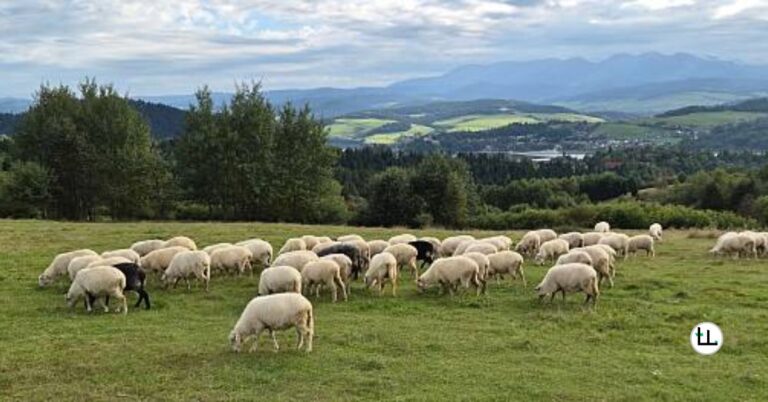
Dorper sheep stocking rate per acre is one of the most important factors determining pasture productivity, flock health, and farm profitability. Stocking rate refers to the number of sheep that can graze a given area of land without causing overgrazing, pasture degradation, or declining animal performance. Although Dorper sheep are efficient grazers capable of utilizing a wide range of forage species, the ideal stocking rate depends on pasture quality, rainfall, soil fertility, grazing management, supplementation, and production objectives rather than land size alone.
Many new sheep farmers assume there is a universal stocking rate that applies to every farm. In reality, one acre of highly productive irrigated pasture may support several times more sheep than an acre of poor natural grazing. Successful producers therefore calculate stocking rates based on forage production instead of relying on fixed numbers.
This guide explains how to determine the ideal stocking rate for Dorper sheep, factors affecting carrying capacity, grazing management practices, and practical strategies for maximizing pasture productivity while maintaining healthy and profitable flocks.
Table of Contents
What Is Stocking Rate?
Stocking rate is the number of sheep grazing a specific land area over a given period while allowing pasture to remain productive and sustainable.
An appropriate stocking rate balances:
- Available forage
- Feed demand
- Pasture recovery
- Animal performance
- Seasonal pasture growth
Maintaining the correct stocking rate ensures sheep receive adequate nutrition without damaging grazing land.
Why Stocking Rate Is Important
Proper stocking rates directly affect both pasture health and flock productivity.
Maintaining the right number of sheep per acre helps farmers:
- Improve growth performance
- Enhance feed conversion
- Maintain healthy body condition score
- Reduce supplementary feeding costs
- Prevent overgrazing
- Improve pasture longevity
- Reduce soil erosion
- Improve reproductive performance
- Lower internal parasite pressure
- Increase long-term profitability
Overstocking usually reduces both pasture production and animal performance, while understocking often results in inefficient forage utilization.
What Determines the Number of Dorper Sheep Per Acre?
No single stocking rate applies to every farm.
Several important factors influence how many Dorper sheep an acre can support.
Pasture Quality
Pasture quality is the most important factor affecting stocking rate.
Highly productive improved pastures generally support more sheep than poor natural grazing.
Improved pasture species include:
- Rhodes grass
- Brachiaria
- Lucerne
- Improved mixed pastures
Higher-quality forage supplies more energy and protein, allowing greater carrying capacity.
Rainfall
Rainfall determines how much pasture grows throughout the year.
Areas receiving reliable rainfall generally support higher stocking rates because forage regrows more rapidly.
During prolonged dry seasons, pasture production declines, requiring farmers to reduce stocking rates or provide supplementary feed.
Soil Fertility
Healthy soils produce healthier pasture.
Good soil fertility improves:
- Forage yield
- Plant quality
- Root development
- Drought resilience
Regular soil improvement increases the carrying capacity of grazing land over time.
Grazing Management
Good grazing management often increases carrying capacity more than simply expanding land area.
Practices such as rotational grazing, pasture renovation, weed control, and forage conservation allow farmers to support more sheep sustainably.
Poor grazing management rapidly reduces pasture productivity regardless of rainfall or soil quality.
Supplementary Feeding
Strategic supplementary feeding reduces pressure on pasture during periods of slow forage growth.
Providing:
- Hay
- Silage
- Concentrates
- Mineral supplementation
allows farmers to maintain productivity without forcing sheep to overgraze available pasture.
Age and Class of Sheep
Different classes of sheep consume different quantities of feed.
Growing lambs, breeding rams, pregnant ewes, and lactating ewes generally require more nutrients than dry mature sheep.
Therefore, the productive capacity of one acre depends not only on the number of animals but also on their physiological stage and nutritional requirements.
General Stocking Rate Guidelines for Dorper Sheep
Although stocking rates vary widely depending on local conditions, general guidelines provide a useful starting point for planning a sheep enterprise.
Highly productive pasture with good rainfall, fertile soils, and effective management can support considerably more sheep than poor natural grazing.
Typical grazing systems include:
Improved Pasture
Improved pasture managed with rotational grazing, fertilization, and good weed control generally provides the highest carrying capacity.
Examples include pasture dominated by:
- Rhodes grass
- Brachiaria
- Lucerne
- Mixed improved grasses and legumes
Such systems often allow higher stocking densities while maintaining excellent growth performance and pasture recovery.
Natural Pasture
Natural grazing areas generally produce lower forage yields than improved pasture.
Stocking rates should therefore be adjusted according to seasonal forage production rather than fixed annual targets.
Supplementary feeding becomes increasingly important during dry periods.
Semi-Arid Grazing
Semi-arid grazing lands often experience highly variable forage production.
Farmers should maintain flexible stocking rates that respond to rainfall and pasture availability.
Overstocking during drought can permanently damage grazing land while reducing flock productivity.
Carrying Capacity vs Stocking Rate
Although the two terms are often used interchangeably, carrying capacity and stocking rate have different meanings.
Carrying capacity refers to the maximum number of sheep that pasture can support sustainably over time.
Stocking rate refers to the number of sheep the farmer actually places on the land.
Successful farmers attempt to match stocking rate with carrying capacity.
If stocking rate exceeds carrying capacity:
- Pasture declines.
- Sheep lose condition.
- Feed costs increase.
- Soil erosion accelerates.
- Internal parasite pressure increases.
Maintaining this balance supports both pasture health and long-term profitability.
Signs of Overstocking
Overstocking is one of the most common causes of declining pasture productivity.
Early warning signs include:
- Very short pasture.
- Bare patches of soil.
- Slow pasture recovery.
- Increased weed invasion.
- Declining body condition score.
- Reduced growth performance.
- Greater dependence on purchased feed.
- Increased disease pressure.
- Higher internal parasite burdens.
- Soil erosion.
Early intervention helps prevent long-term pasture degradation.
Signs of Understocking
While overstocking is generally more damaging, severe understocking also creates inefficiencies.
Common signs include:
- Excessively mature pasture.
- Large amounts of unused forage.
- Reduced pasture quality.
- Increased weed growth.
- Poor forage utilization.
- Lower carrying efficiency.
Proper grazing management seeks to maximize forage utilization without damaging pasture recovery.
How Rotational Grazing Increases Stocking Rate
One of the most effective methods for increasing carrying capacity is implementing rotational grazing.
Rather than continuously grazing the same area, sheep are moved between paddocks while previously grazed areas recover.
Benefits include:
- Better pasture regrowth.
- Improved forage quality.
- Reduced overgrazing.
- Better feed conversion.
- Higher growth performance.
- Reduced soil erosion.
- Lower internal parasite exposure.
Many farms can sustainably support more sheep after introducing effective rotational grazing compared with continuous grazing.
Supplementary Feeding and Stocking Rate
Supplementary feeding helps maintain animal performance when pasture alone cannot satisfy nutritional requirements.
Common supplements include:
- Hay
- Silage
- Maize bran
- Wheat bran
- Lucerne
- Protein supplements
- Mineral supplementation
Strategic supplementation reduces grazing pressure during seasonal feed shortages while maintaining healthy body condition score.
However, supplementation should complement good pasture management rather than compensate for chronic overstocking.
Water Requirements and Stocking Density
As stocking density increases, reliable water supplies become increasingly important.
Water influences:
- Feed intake.
- Digestion.
- Feed conversion.
- Temperature regulation.
- Animal health.
Water points should:
- Provide unrestricted access.
- Minimize overcrowding.
- Reduce mud formation.
- Be cleaned regularly.
Poor water availability often limits carrying capacity before pasture becomes the limiting factor.
Infrastructure Needed for Higher Stocking Rates
Increasing stocking density requires improvements in farm infrastructure to maintain productivity.
Essential infrastructure includes:
- Reliable fencing.
- Multiple paddocks.
- Water distribution systems.
- Feed storage facilities.
- Sheep handling facilities.
- Shade and shelter.
- Quarantine pens.
Investing in infrastructure often produces greater long-term returns than simply increasing flock numbers without improving management.
Stocking Rate for Dorper Sheep in Kenya
Kenya’s diverse agroecological zones mean there is no single stocking rate that suits every farm. Farmers should base stocking decisions on pasture production, rainfall, and management practices rather than following fixed recommendations.
High-Rainfall Areas
Counties with reliable rainfall generally produce abundant pasture throughout much of the year.
With improved pasture management, farmers can increase carrying capacity by:
- Establishing improved forage species.
- Practicing rotational grazing.
- Applying soil fertility management.
- Conserving surplus forage as hay or silage.
- Implementing effective weed control.
These practices support higher stocking rates while maintaining pasture quality.
Medium-Rainfall Areas
In medium-rainfall regions, pasture production varies considerably between wet and dry seasons.
Farmers should:
- Monitor pasture availability regularly.
- Adjust stocking rates according to forage production.
- Supplement strategically during dry periods.
- Avoid overgrazing at the end of the rainy season.
Flexible management improves long-term pasture sustainability.
Arid and Semi-Arid Lands (ASALs)
The ASAL regions require more conservative stocking strategies because rainfall is highly unpredictable.
Pasture growth may fluctuate dramatically from one season to another.
Successful producers often:
- Maintain lower baseline stocking rates.
- Produce or purchase conserved forage.
- Reduce flock size early during drought.
- Protect breeding stock with supplementary feeding.
These practices reduce pasture degradation while improving drought resilience.
Calculating Stocking Rate on Your Farm
Rather than relying solely on general recommendations, farmers should estimate stocking rates based on actual pasture production.
A practical approach includes:
- Estimate the total grazing area.
- Assess available pasture quantity and quality.
- Estimate the flock’s annual feed requirements.
- Allow for pasture recovery through rotational grazing.
- Monitor pasture utilization throughout the year.
- Adjust flock size whenever forage availability changes.
Regular pasture monitoring provides far more accurate guidance than applying a fixed number of sheep per acre.
Improving Carrying Capacity Without Buying More Land
Many farmers can increase flock productivity without expanding their grazing area.
The goal should be to increase pasture production rather than simply increasing animal numbers.
Effective strategies include:
Improve Pasture Quality
Establish productive pasture species such as:
- Rhodes grass
- Brachiaria
- Lucerne
- Improved grass-legume mixtures
Higher-quality forage supports better growth performance while increasing carrying capacity.
Practice Rotational Grazing
Moving sheep between paddocks allows pasture to recover before being grazed again.
Benefits include:
- Faster pasture regrowth.
- Better forage quality.
- Reduced overgrazing.
- Lower internal parasite pressure.
- Improved pasture persistence.
Fertilize and Improve Soil Health
Healthy soils produce healthier pasture.
Regular soil testing and appropriate fertilizer or manure application improve forage production while increasing grazing capacity.
Control Weeds
Weeds compete with productive pasture species for nutrients, sunlight, and moisture.
Routine weed management increases the amount of usable forage available for grazing.
Conserve Excess Forage
During periods of rapid pasture growth, surplus forage should be conserved as:
- Hay
- Silage
Conserved feed reduces grazing pressure during dry seasons while maintaining flock productivity.
Common Stocking Rate Mistakes Farmers Make
Many pasture problems result from management decisions rather than poor land quality.
Common mistakes include:
- Overstocking throughout the year.
- Ignoring seasonal pasture changes.
- Practicing continuous grazing.
- Delaying supplementary feeding.
- Failing to monitor pasture condition.
- Ignoring body condition score.
- Neglecting soil fertility.
- Allowing severe overgrazing.
- Depending entirely on natural pasture.
- Ignoring internal parasite management.
Correcting these mistakes often improves both pasture condition and flock performance without increasing production costs.
Frequently Asked Questions
How many Dorper sheep can one acre support?
The number depends on pasture quality, rainfall, soil fertility, grazing management, and supplementation. Well-managed improved pasture generally supports significantly more sheep than poor natural grazing.
Does rotational grazing increase stocking rate?
Yes. Rotational grazing improves pasture recovery, increases forage production, reduces overgrazing, and often allows farmers to support more sheep sustainably.
What happens if too many sheep graze one acre?
Overstocking reduces pasture availability, lowers growth performance, increases supplementary feeding costs, raises internal parasite pressure, and accelerates soil erosion.
Can supplementary feeding increase stocking rate?
Strategic supplementation helps reduce grazing pressure during feed shortages, but it should support—not replace—good pasture management.
Does pasture quality matter more than land size?
Yes. One acre of productive, well-managed pasture can often support considerably more sheep than several acres of poor-quality grazing land.
How often should stocking rates be reviewed?
Farmers should assess stocking rates regularly throughout the year, particularly after major rainfall changes, droughts, or significant fluctuations in pasture growth.
Conclusion
Determining the correct Dorper sheep stocking rate per acre is essential for maintaining healthy pastures, productive flocks, and profitable sheep enterprises. Because carrying capacity depends on pasture quality, rainfall, soil fertility, grazing management, and seasonal conditions, there is no universal stocking rate suitable for every farm. Successful producers continually match flock size to available forage rather than relying on fixed stocking numbers.
Practices such as rotational grazing, improved pasture establishment, soil fertility management, forage conservation, strategic supplementation, and effective internal parasite control all contribute to higher carrying capacity while protecting grazing land from degradation. Regular monitoring of pasture condition, body condition score, and flock performance enables farmers to make timely adjustments before productivity declines.
Whether managing Dorper sheep under intensive grazing systems or extensive rangeland conditions, maintaining an appropriate stocking rate is one of the most important management decisions for improving feed conversion, maximizing growth performance, reducing production costs, and ensuring the long-term sustainability of both the flock and the grazing resource.