

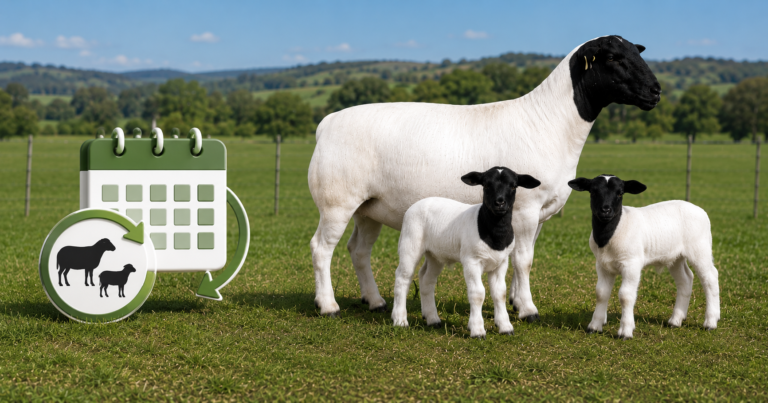
Few traits have contributed to the popularity of Dorper sheep as much as their reproductive flexibility. Are Dorper sheep seasonal breeders? Unlike many traditional sheep breeds that breed only during specific times of the year, Dorpers are known for their ability to breed throughout most of the year. This characteristic gives farmers greater control over lamb production and flock management.
What Does Seasonal Breeding Mean?
Seasonal breeding refers to the natural tendency of sheep to become fertile only during particular months of the year. Many breeds respond to changes in daylight length, becoming reproductively active during autumn and early winter. As daylight decreases, ewes enter regular estrus cycles and can be successfully bred.
This breeding pattern evolved to ensure lambs are born during favorable environmental conditions when feed availability is typically higher.
Are Dorper Sheep Truly Non-Seasonal Breeders?
Dorper sheep are often described as non-seasonal or extended-season breeders. In practical farming conditions, healthy Dorper ewes can cycle and conceive during much of the year. This allows producers to schedule breeding programs based on market demand, pasture conditions, and farm objectives rather than being restricted to a narrow breeding season.
While some seasonal influences may still occur depending on climate and management, Dorpers generally maintain reproductive activity more consistently than many wool breeds.
Why Dorper Sheep Have Better Year-Round Fertility
The breed was developed in South Africa to thrive under challenging environmental conditions. As a result, reproductive efficiency became a key selection trait. Dorper ewes are recognized for their ability to return to estrus relatively quickly after lambing and maintain fertility under extensive grazing systems.
Good nutrition remains essential. Even breeds with strong reproductive potential can experience reduced conception rates if body condition declines due to poor pasture quality or drought conditions.
How Often Can Dorper Ewes Lamb?
One of the major advantages of Dorper sheep is the possibility of accelerated lambing programs. Under good management, some producers achieve three lamb crops in two years. This does not mean every ewe will perform at that level, but it demonstrates the breed’s reproductive capacity.
Most practical farmers focus on maintaining healthy ewe condition and strong lamb survival rates rather than maximizing lambing frequency alone. Sustainable production often delivers better long-term profitability.
Factors That Affect Breeding Success
Although Dorpers can breed during much of the year, several factors influence reproductive performance.
Nutrition
Ewes should enter the breeding season with adequate body condition. Proper energy, protein, and mineral intake support conception and embryo development.
Ram Fertility
A healthy, fertile ram is critical to successful breeding programs. Regular breeding soundness evaluations can help identify problems before the mating season begins.
Health Management
Internal parasites, disease challenges, and poor flock health can negatively affect fertility. Preventive health programs help maintain reproductive performance.
Environmental Conditions
Extreme heat, drought, and limited forage availability may temporarily reduce breeding activity, even in breeds known for year-round fertility.
Benefits of Non-Seasonal Breeding
The ability to breed outside traditional seasons offers several commercial advantages. Farmers can spread lamb production throughout the year, target specific market windows, and improve cash flow. It also allows greater flexibility when rebuilding flock numbers or implementing crossbreeding programs.
For producers supplying breeding stock or meat markets, this flexibility can create opportunities that seasonal breeds may not easily provide.
Challenges of Year-Round Breeding
Year-round breeding requires careful planning. Continuous lambing can increase labor demands and make flock management more complex. Farmers must monitor nutrition, lambing facilities, and health programs consistently to avoid performance declines.
Without proper management, the benefits of extended breeding capability may not translate into higher profitability.
Conclusion
Are Dorper sheep seasonal breeders? In most practical farming situations, Dorper sheep are considered non-seasonal or extended-season breeders. Their ability to cycle and conceive during much of the year provides valuable flexibility for commercial and small-scale producers alike. With proper nutrition, sound health management, and quality breeding stock, Dorper sheep can maintain strong reproductive performance and support efficient lamb production throughout the year.